
Lihao Design Creator 00048
Lihao Design Creator 00048
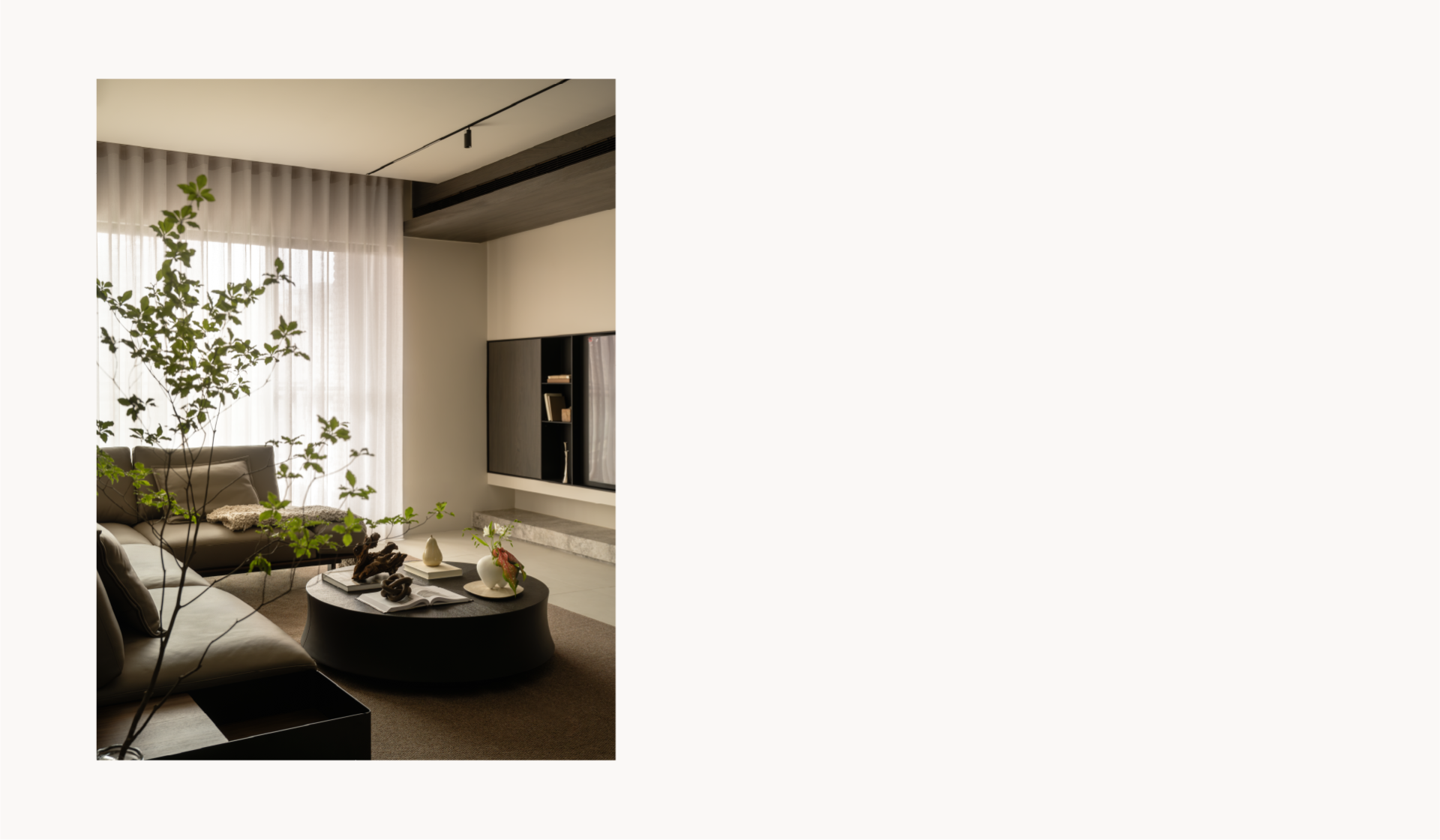
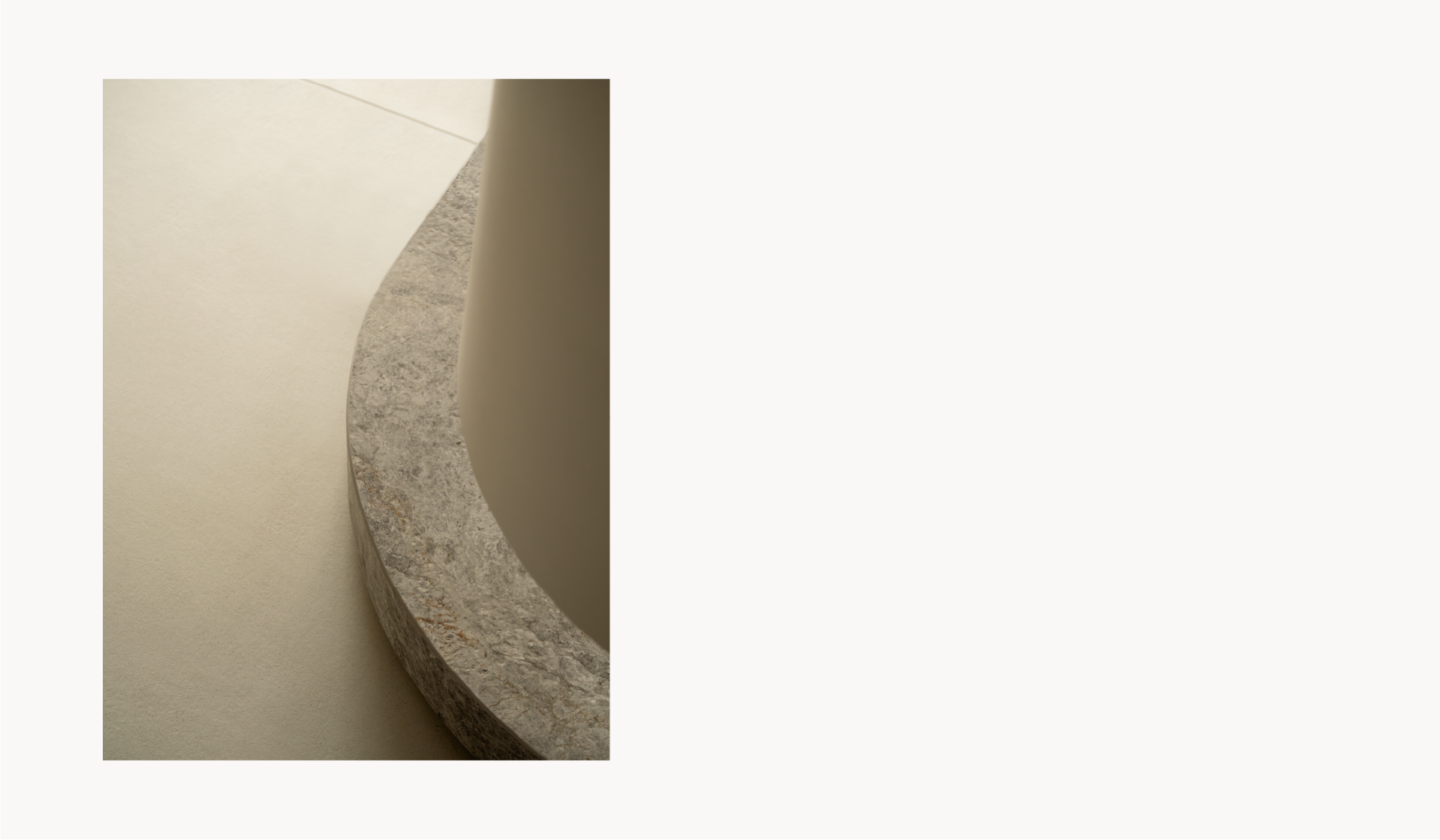
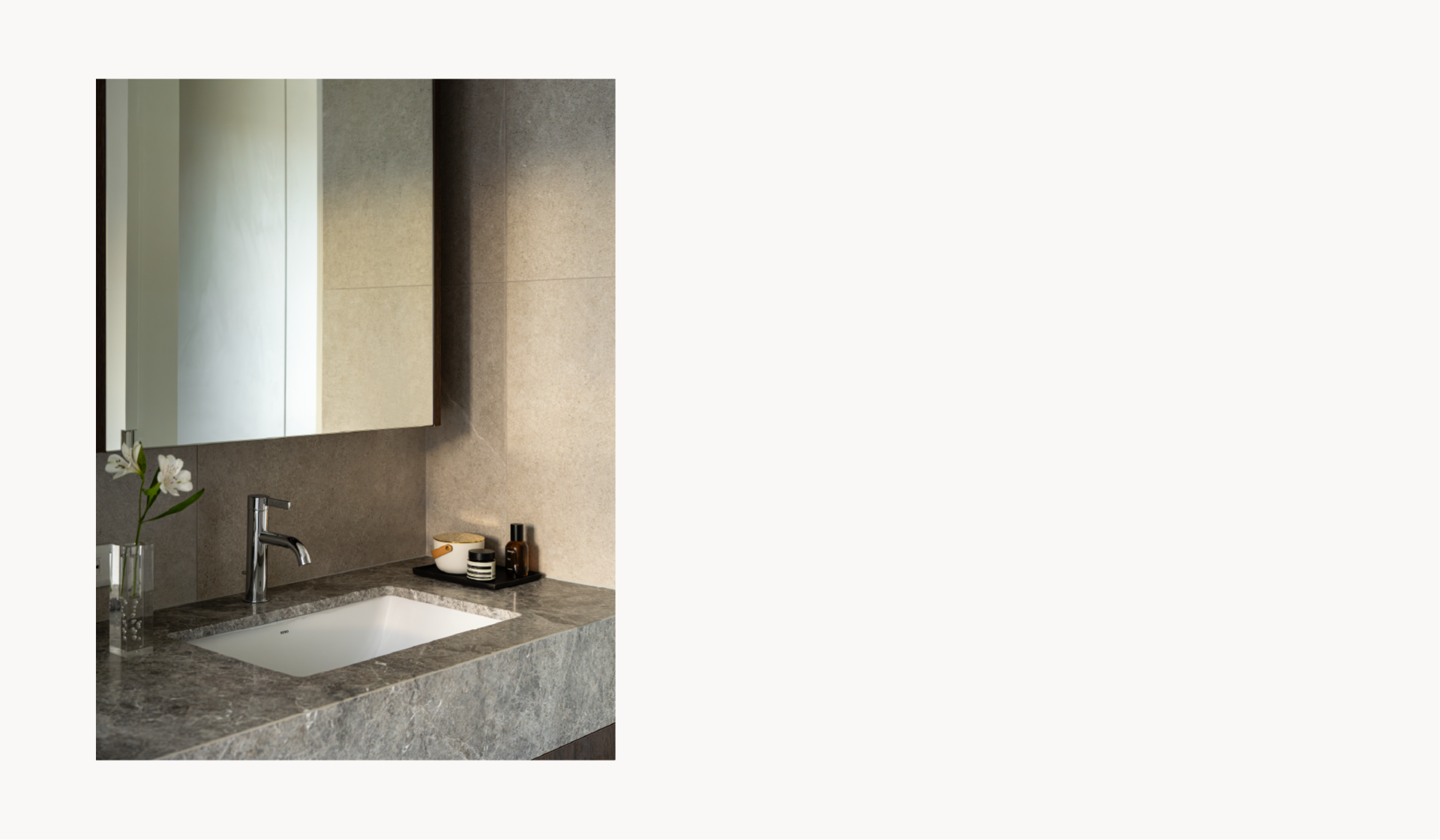
本案以「界線與邊界」作為空間的核心命題,在開放與劃分之間尋找一種恰到好處的平衡。設計不刻意追求全然通透,而是讓界線以柔性的方式存在,使空間在視覺上保持透亮,在使用上卻能清楚回應生活所需。材質選擇上,以低彩度的米灰作為基底,搭配石材的冷靜質地、深色木頭的沉穩份量,以及皮革所帶來的溫潤觸感,使整體氛圍安定而內斂,光線得以在不同材質之間緩慢流動,形塑出安靜且耐看的空間表情。
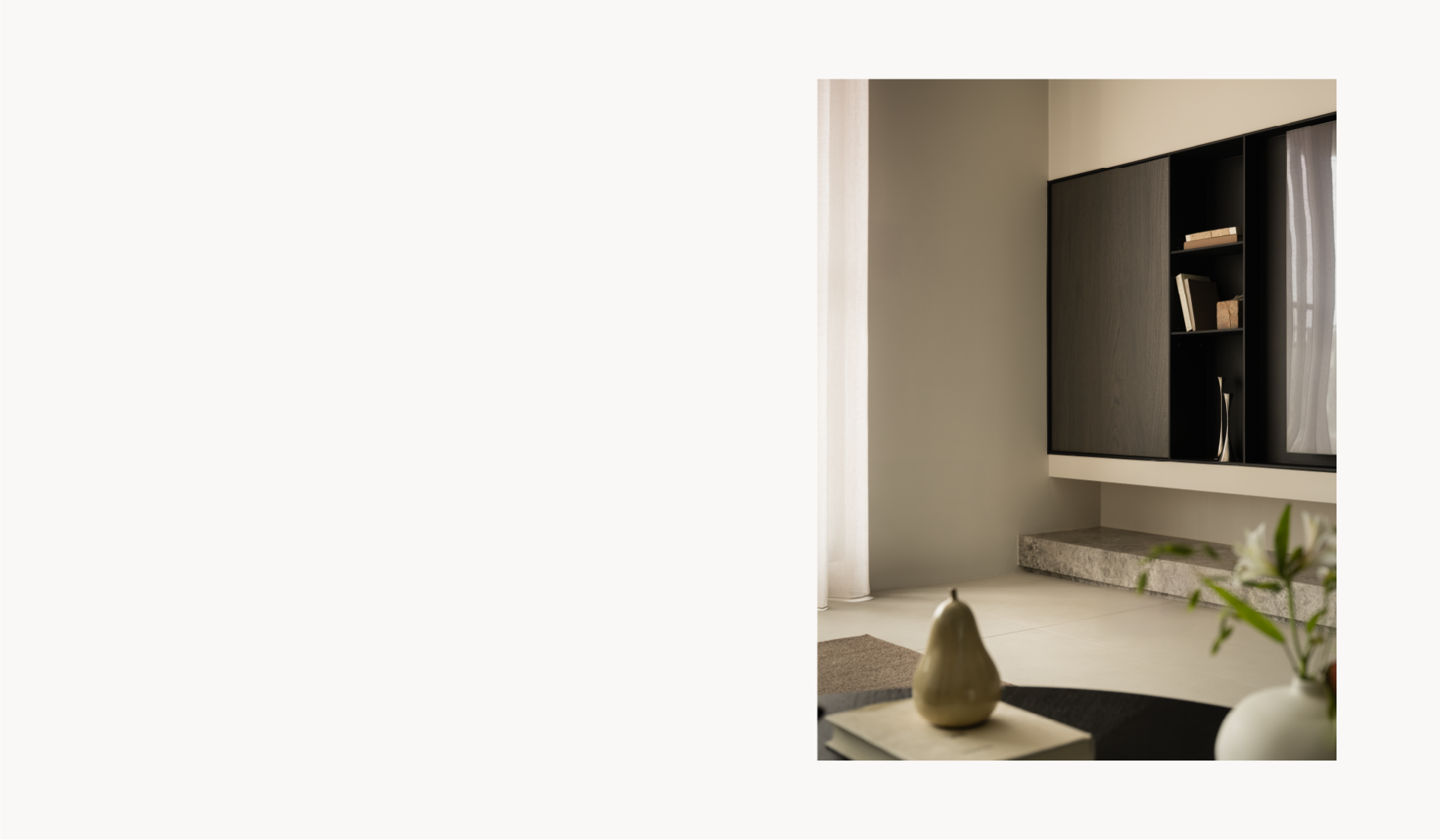
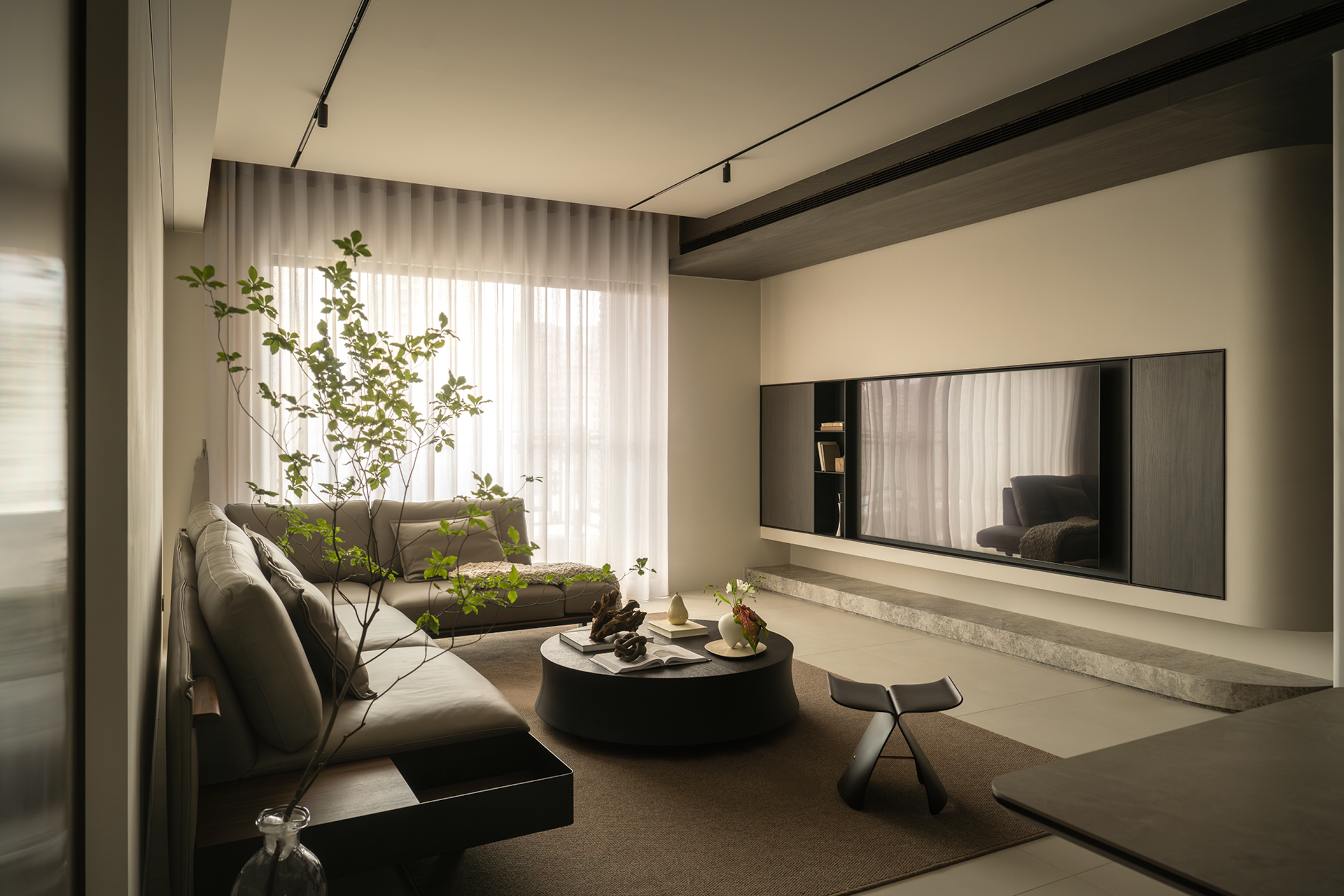
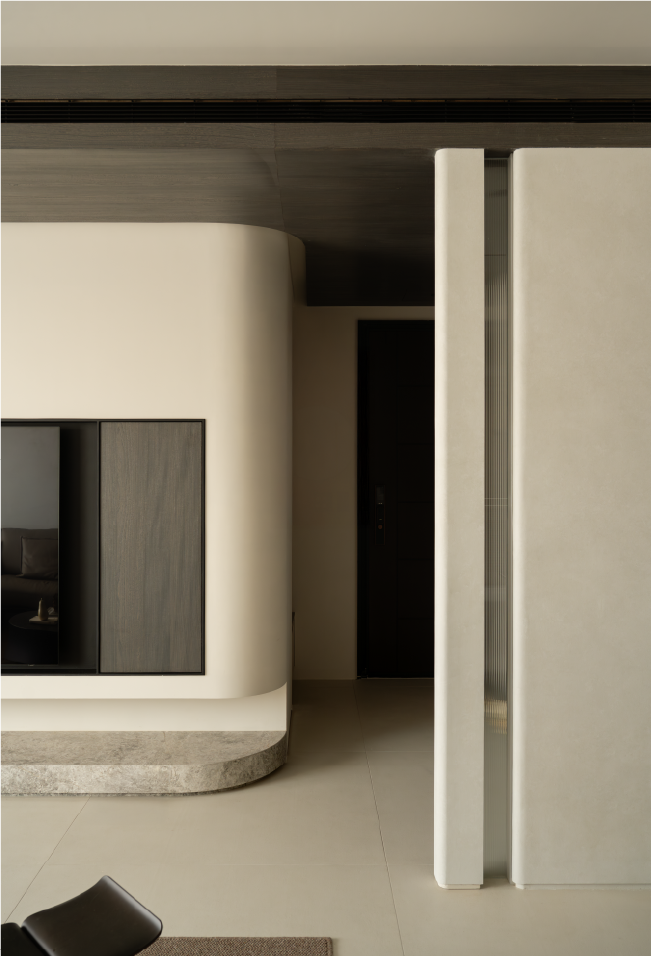
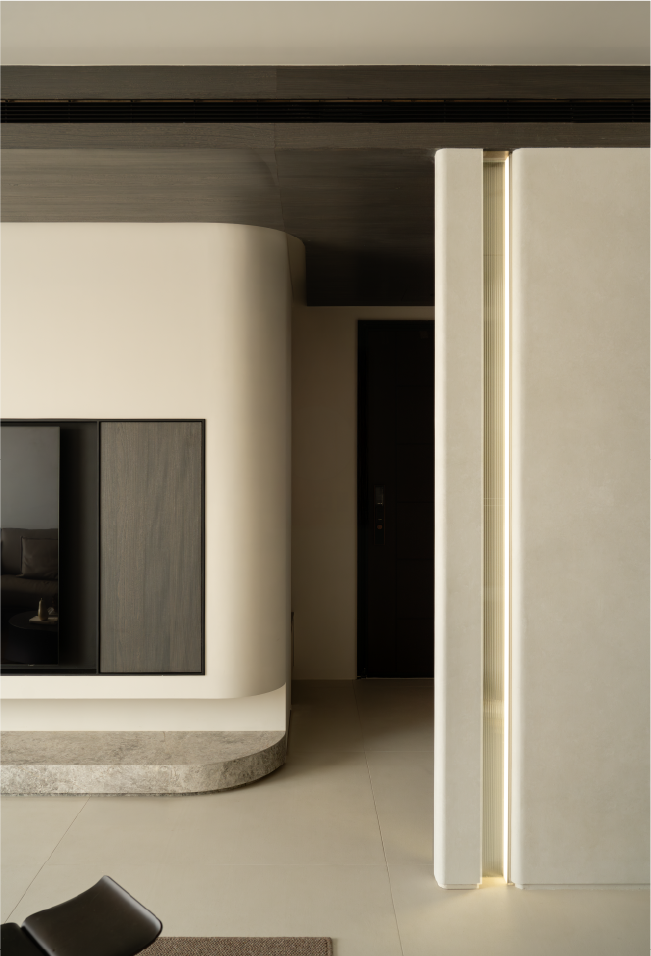
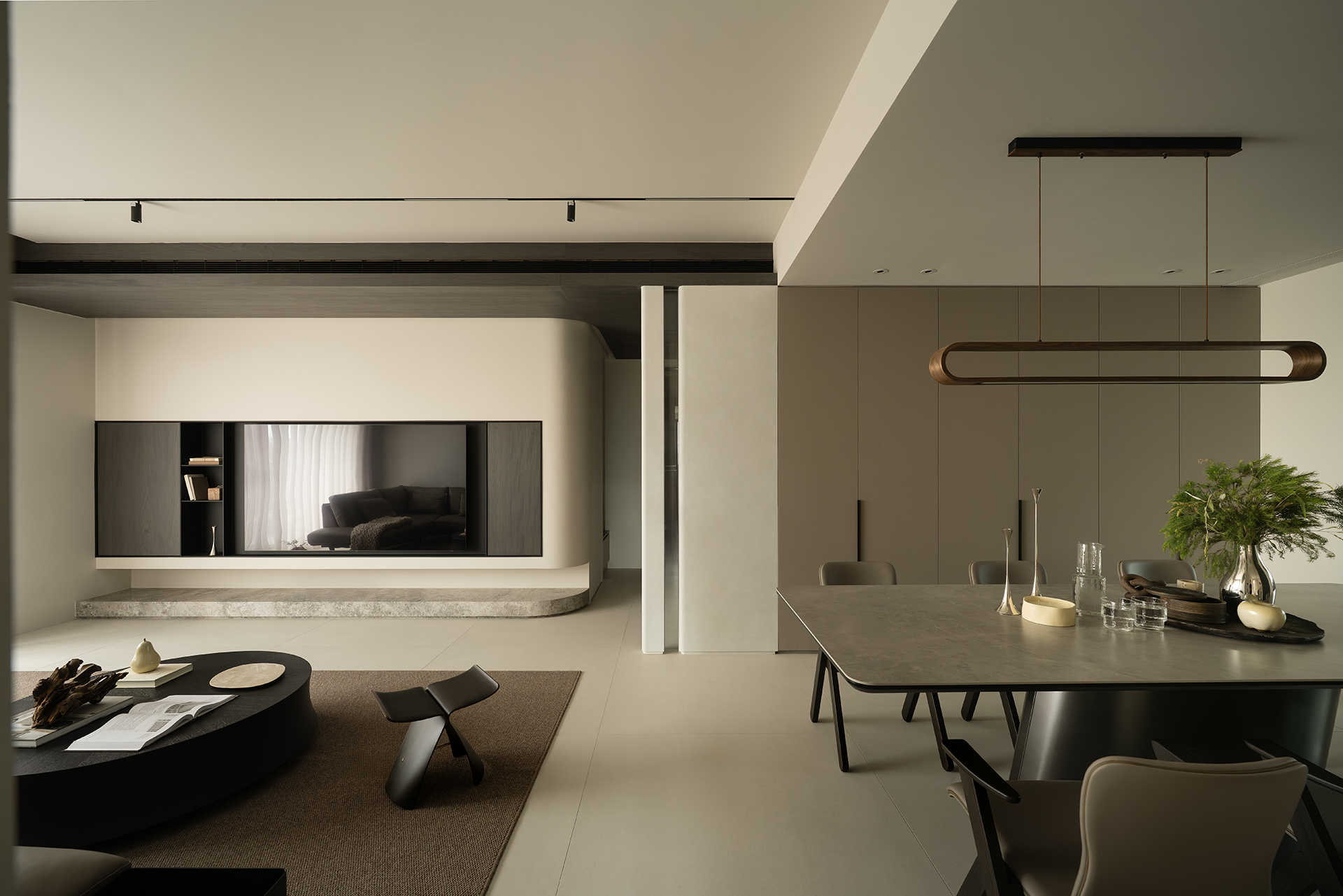
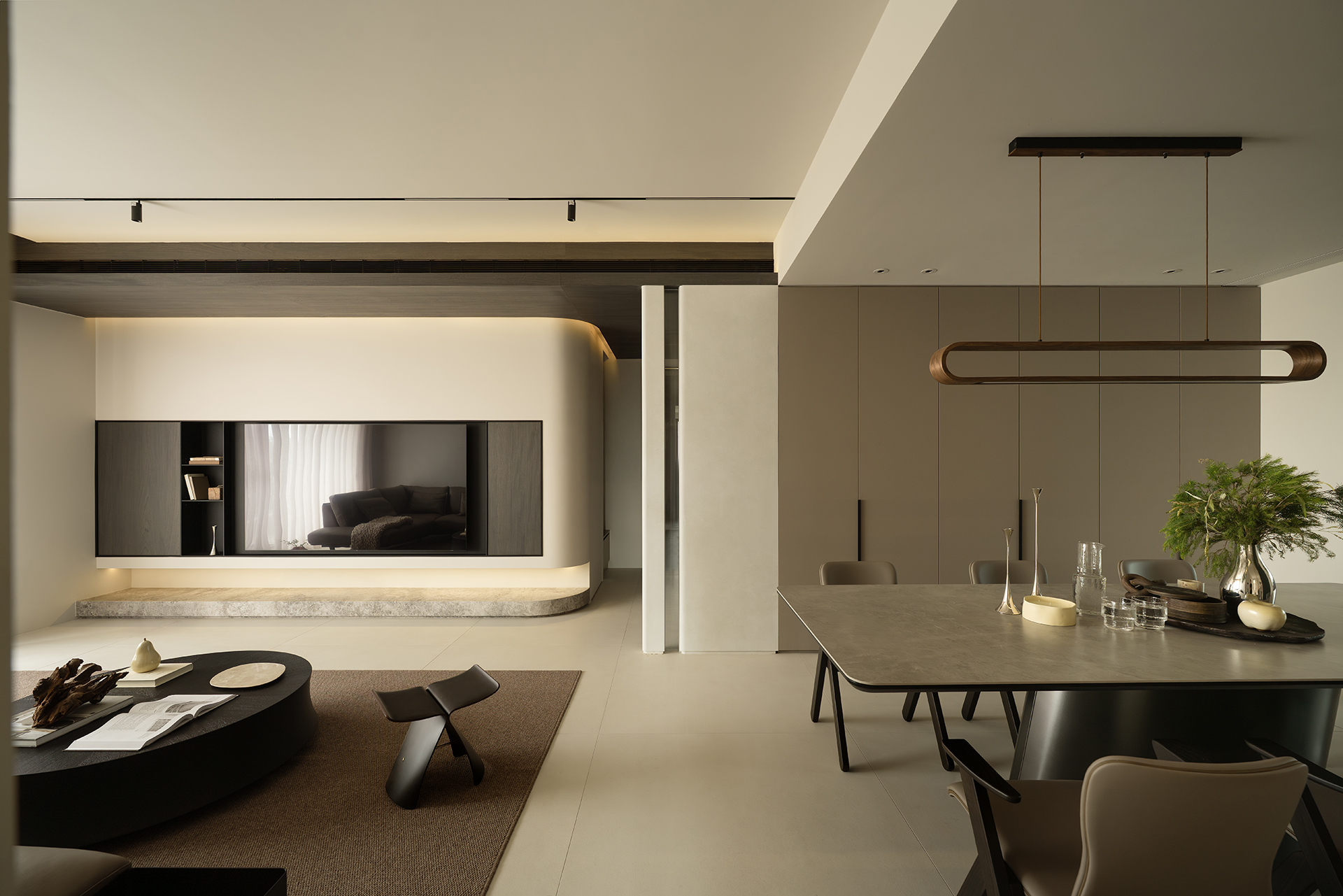
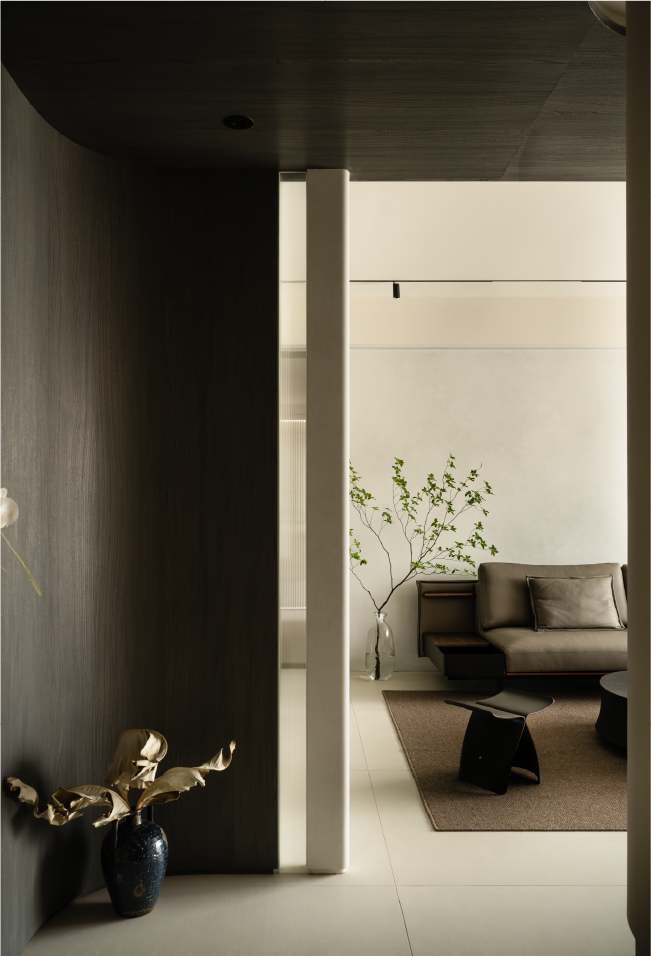
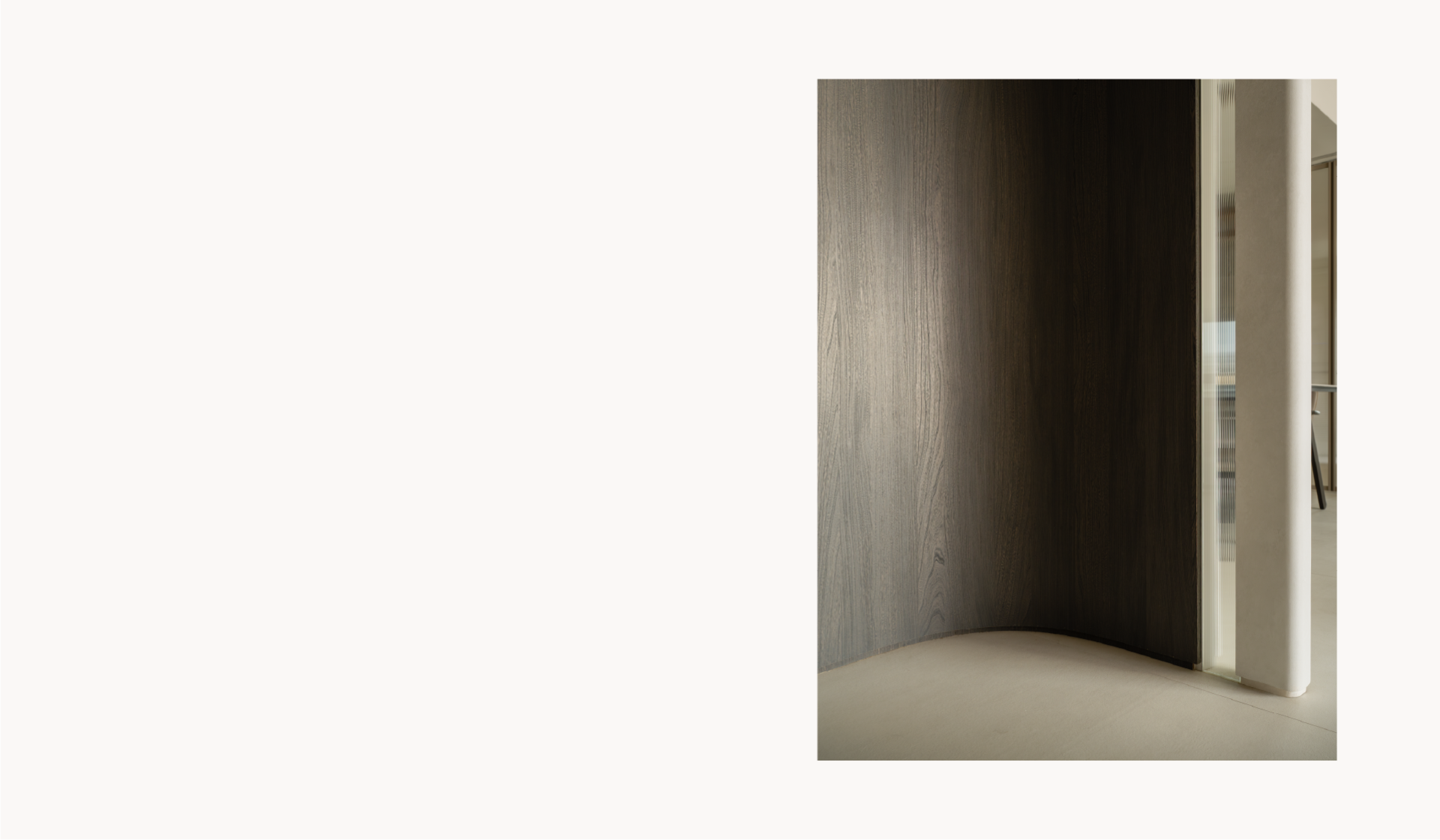
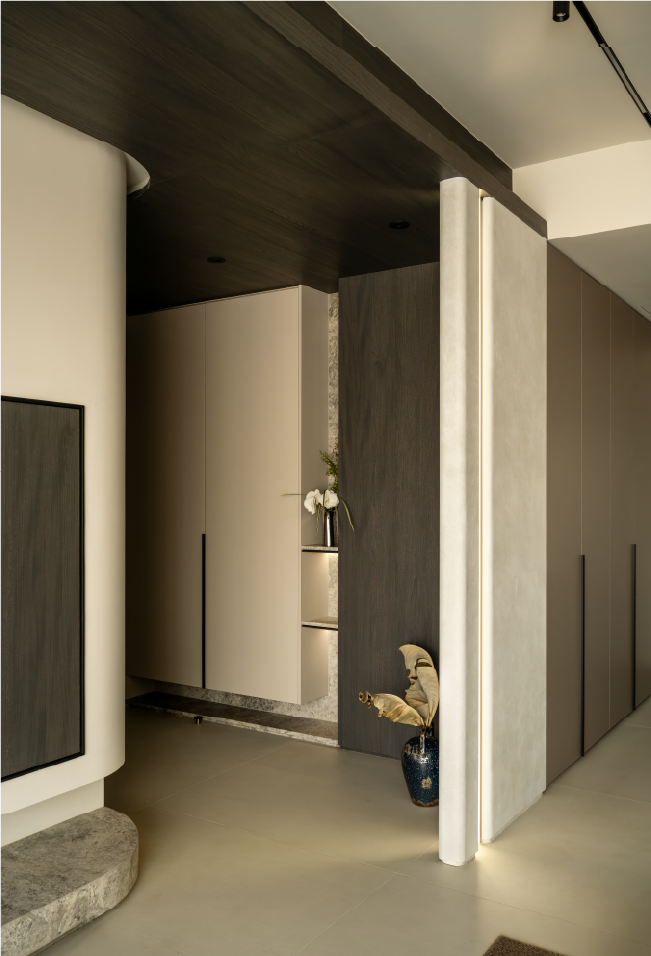
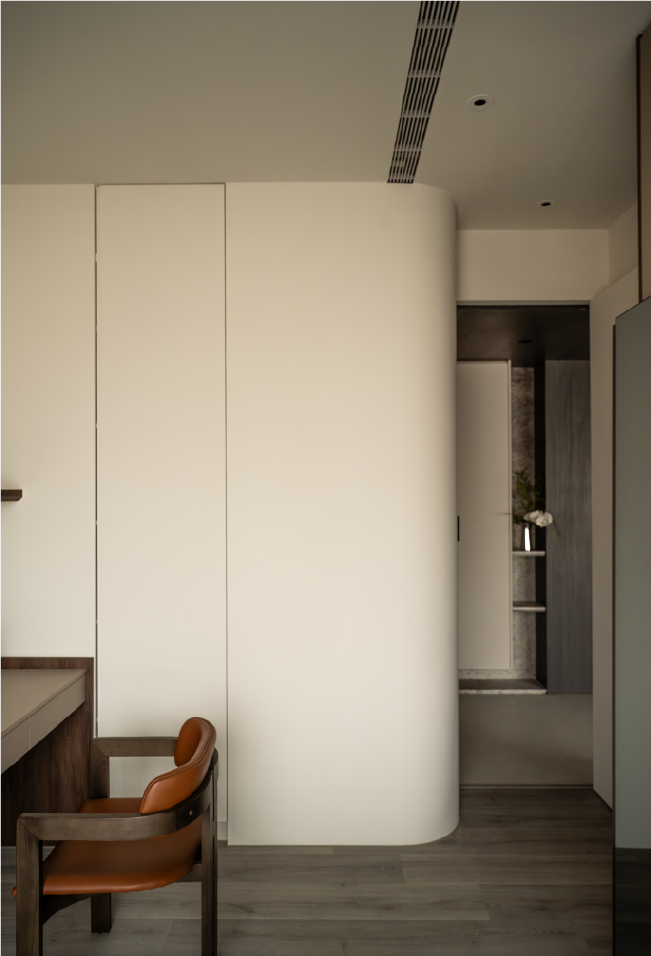
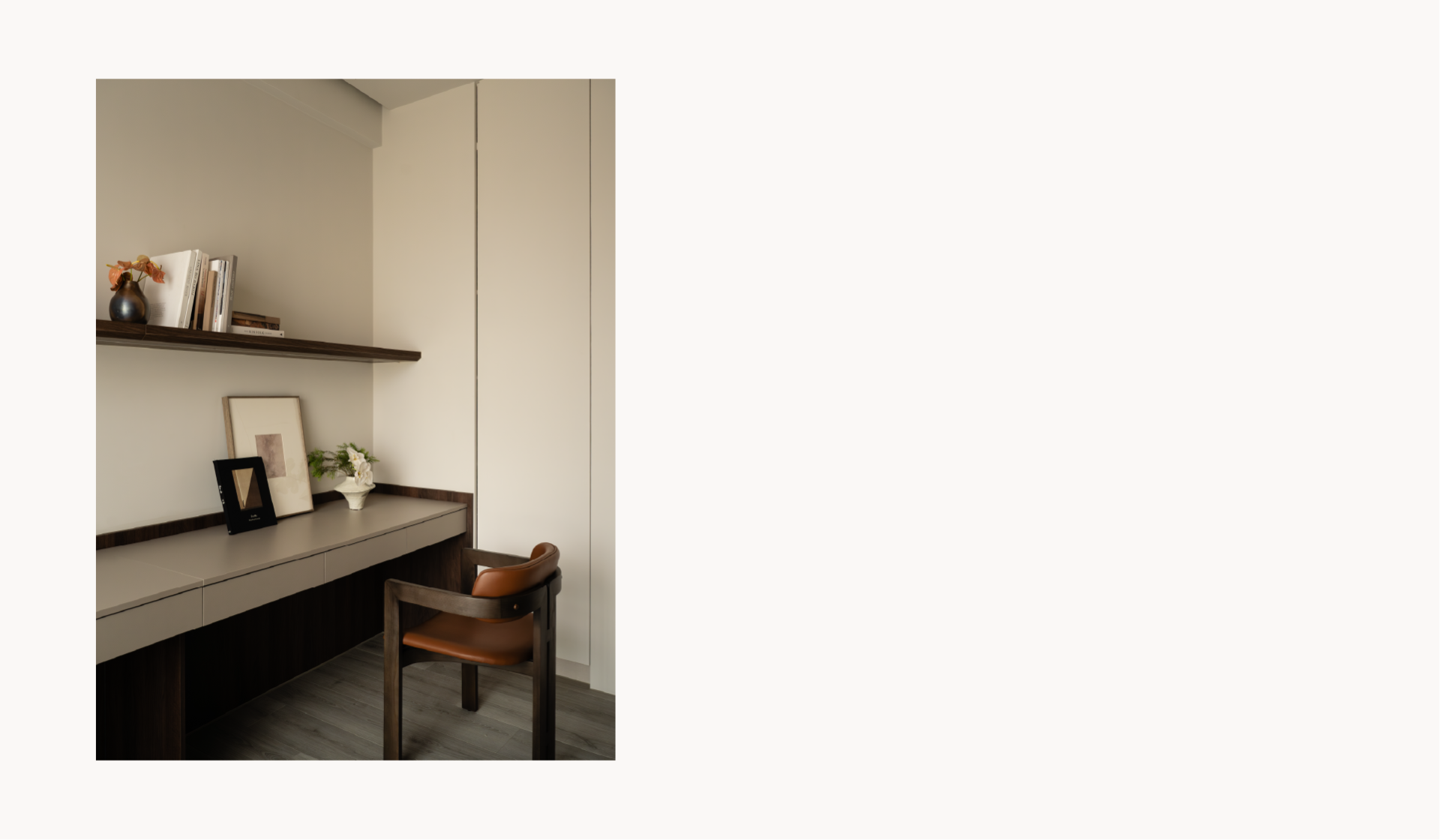
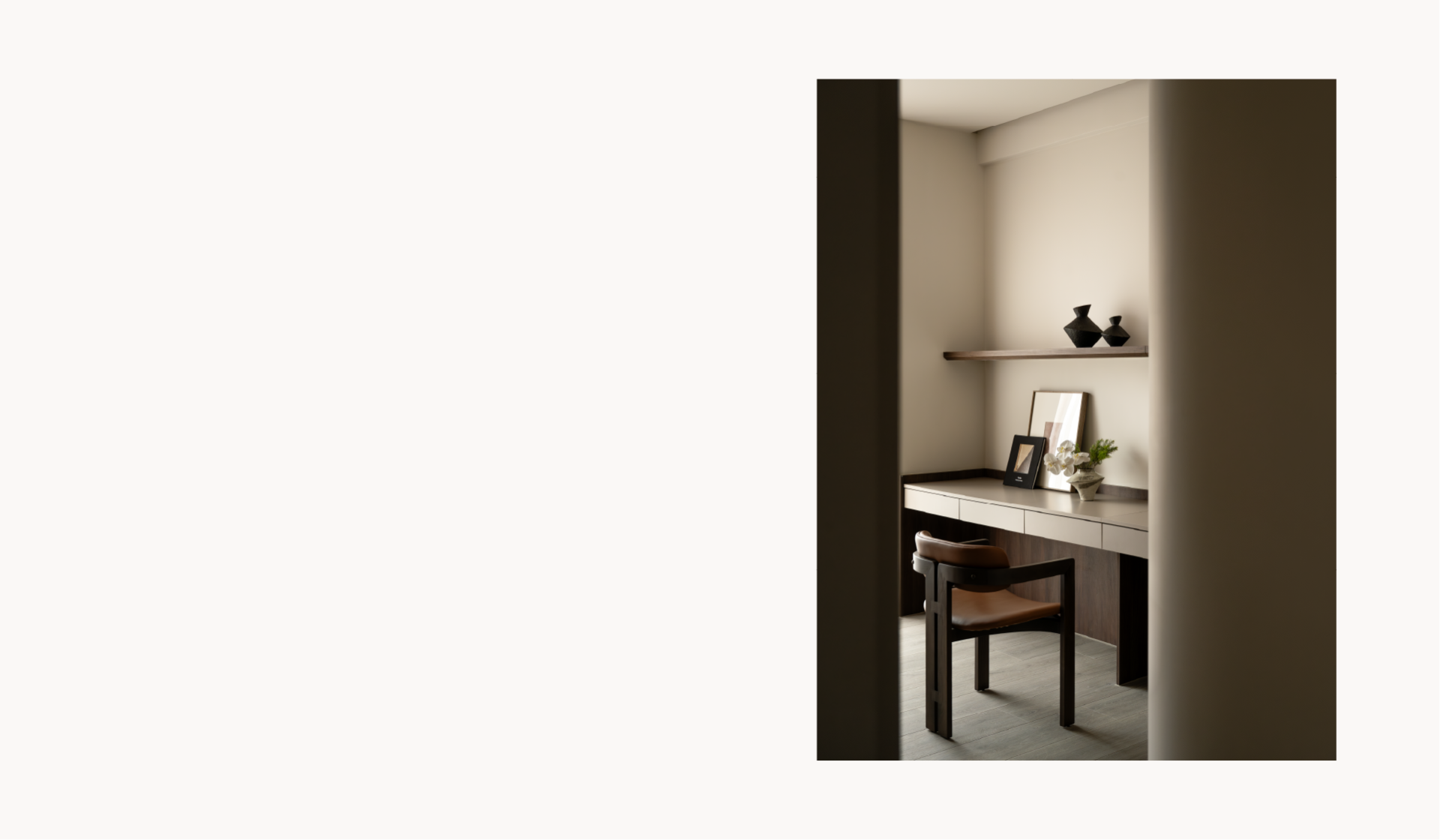
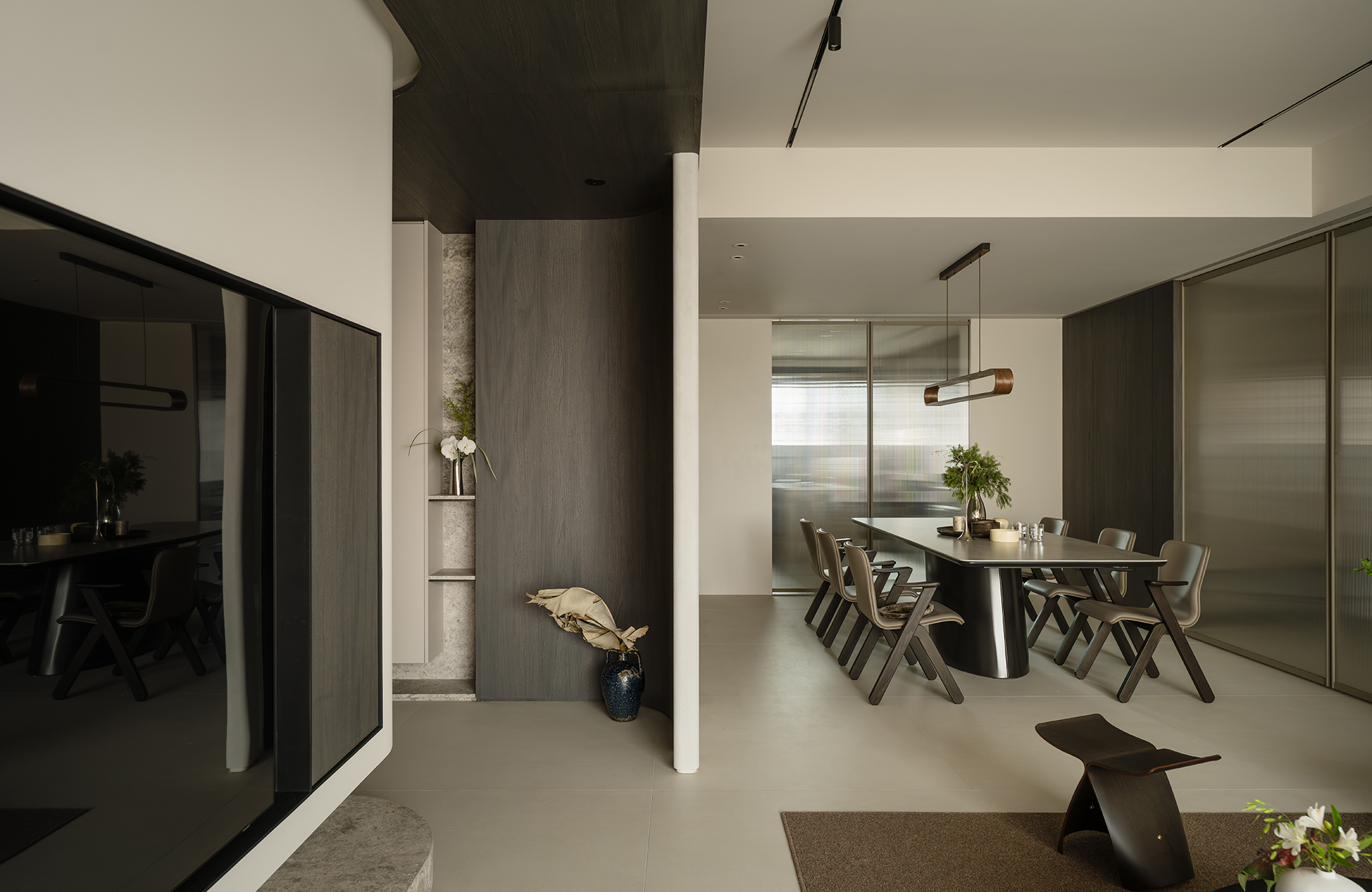
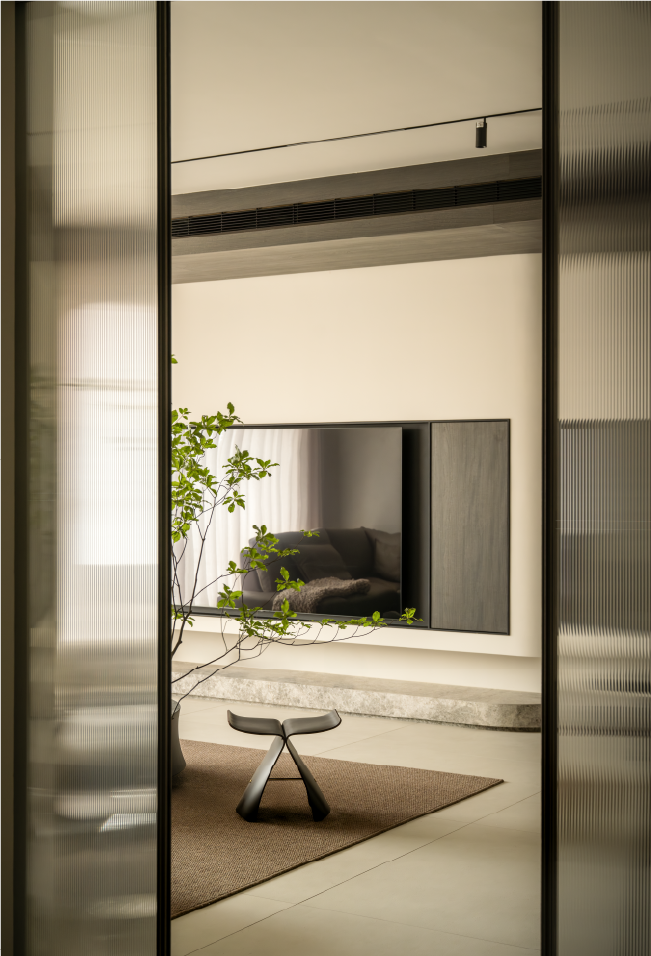
進入室內,玄關成為空間敘事的起點。大門右側設置隱藏門後的書房,使工作與閱讀得以靠近入口卻不干擾主要生活動線,既保有獨立性,也能靈活融入日常節奏。玄關走廊以弧形展開,這道曲線在視覺與行走動態中形成微妙的引導,暗示著前行方向,引領動線自然地向右轉入客廳。轉折處首先映入眼簾的是電視牆,牆面同樣延續弧形語彙,不僅削弱銳角帶來的壓迫與安全疑慮,也讓玄關與客廳之間產生視線上的互動,使兩個場域在過渡中彼此呼應。
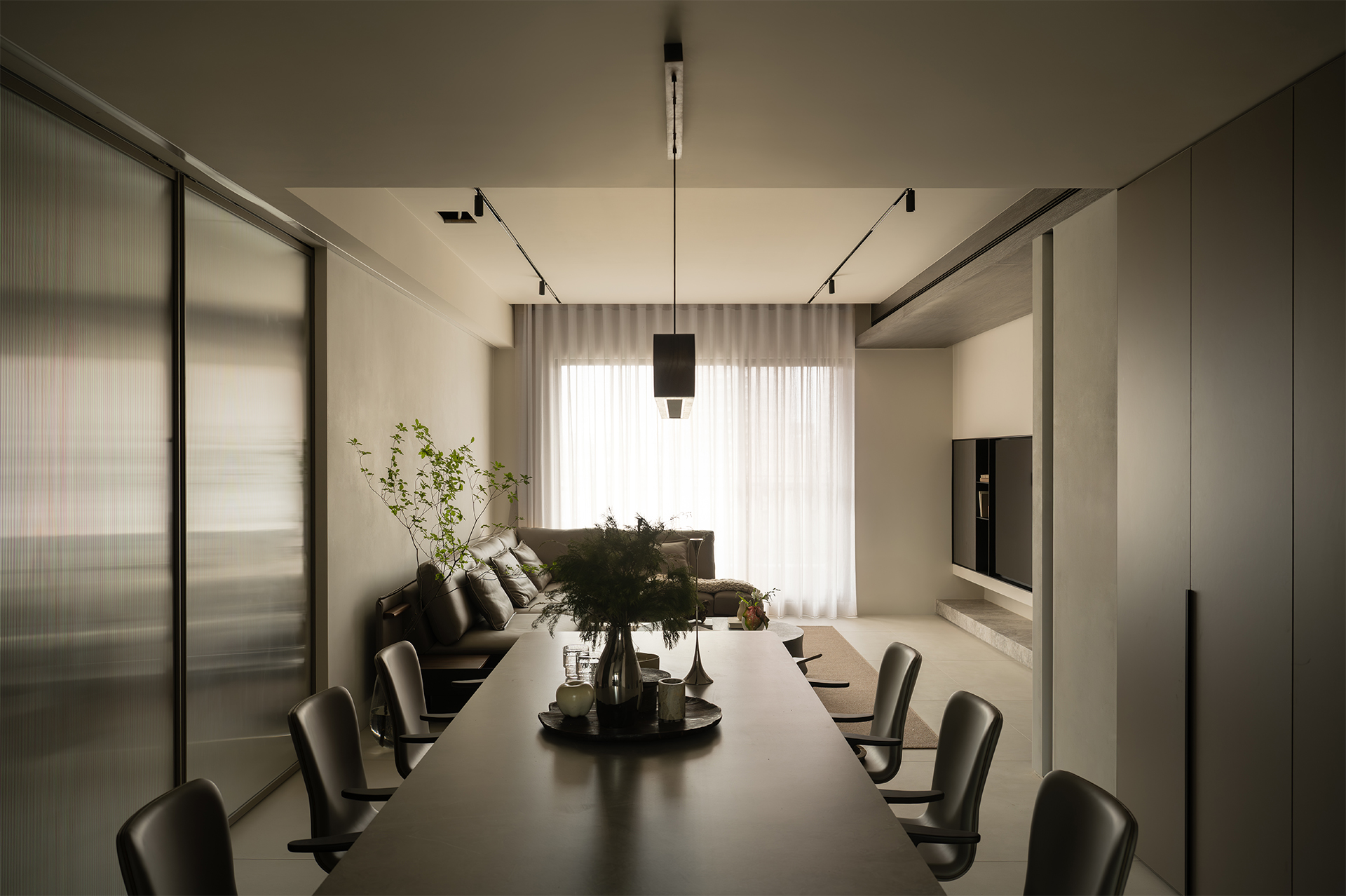
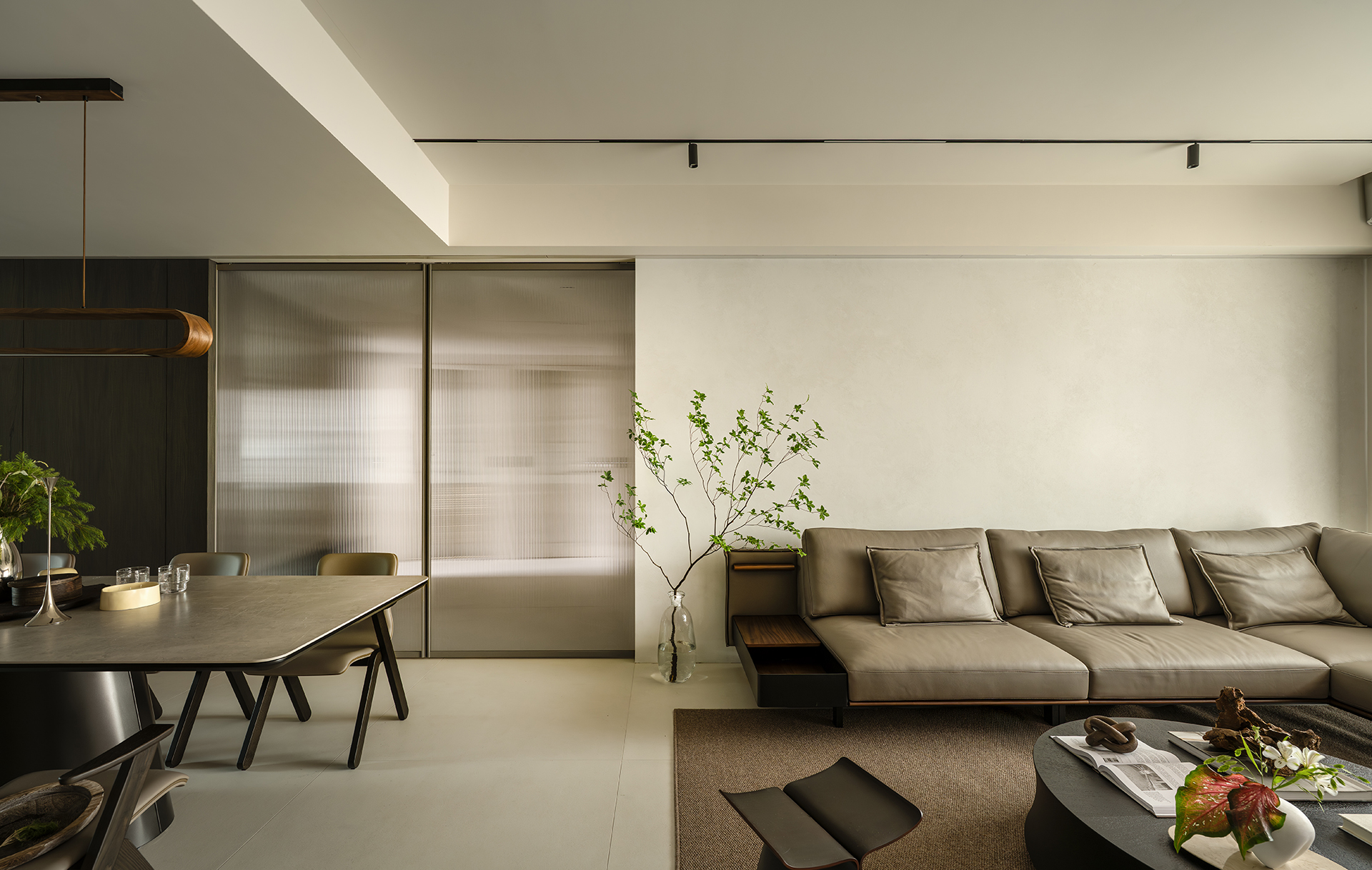
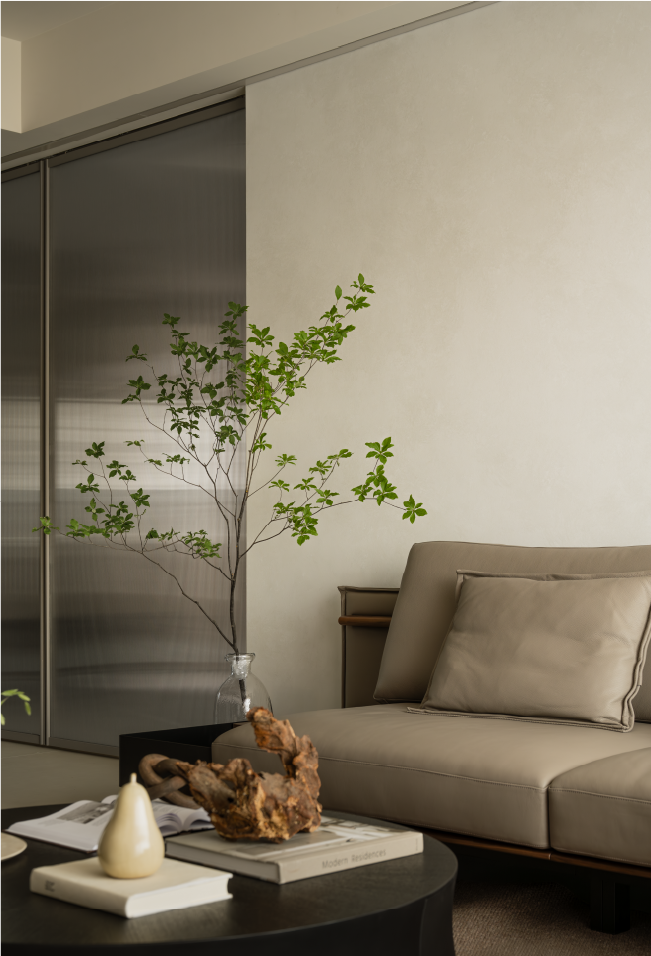
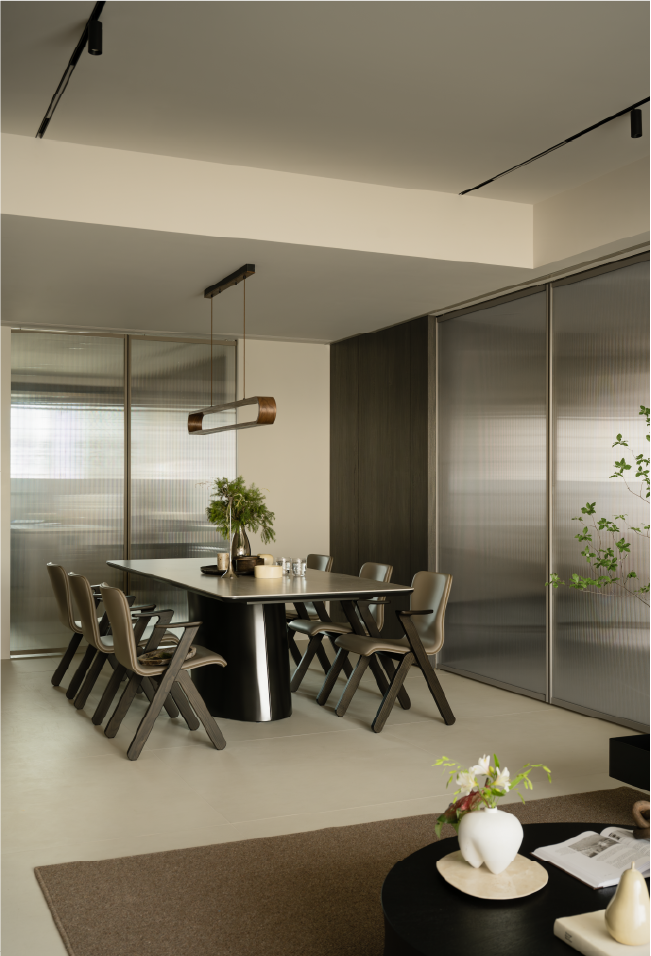
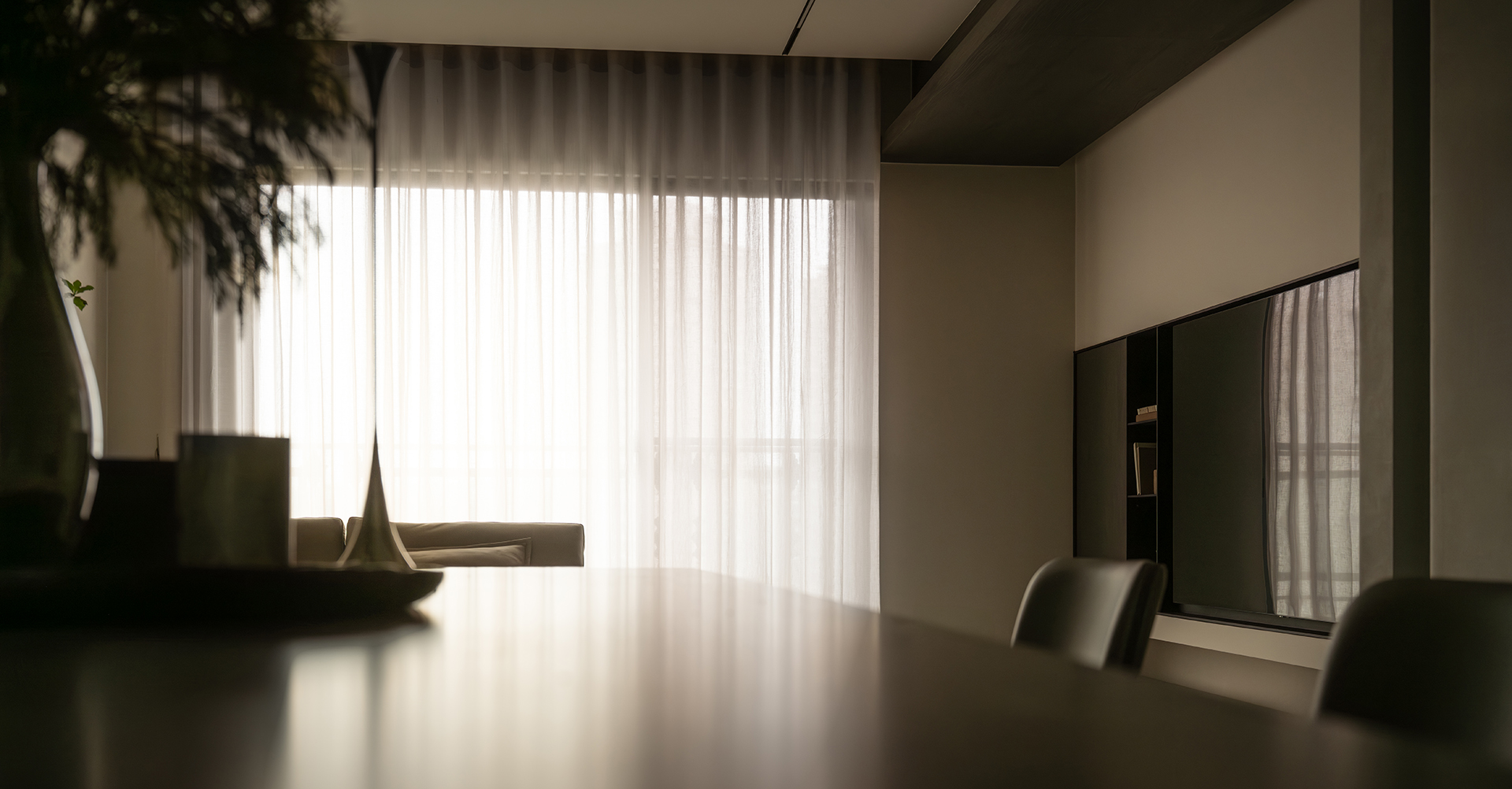
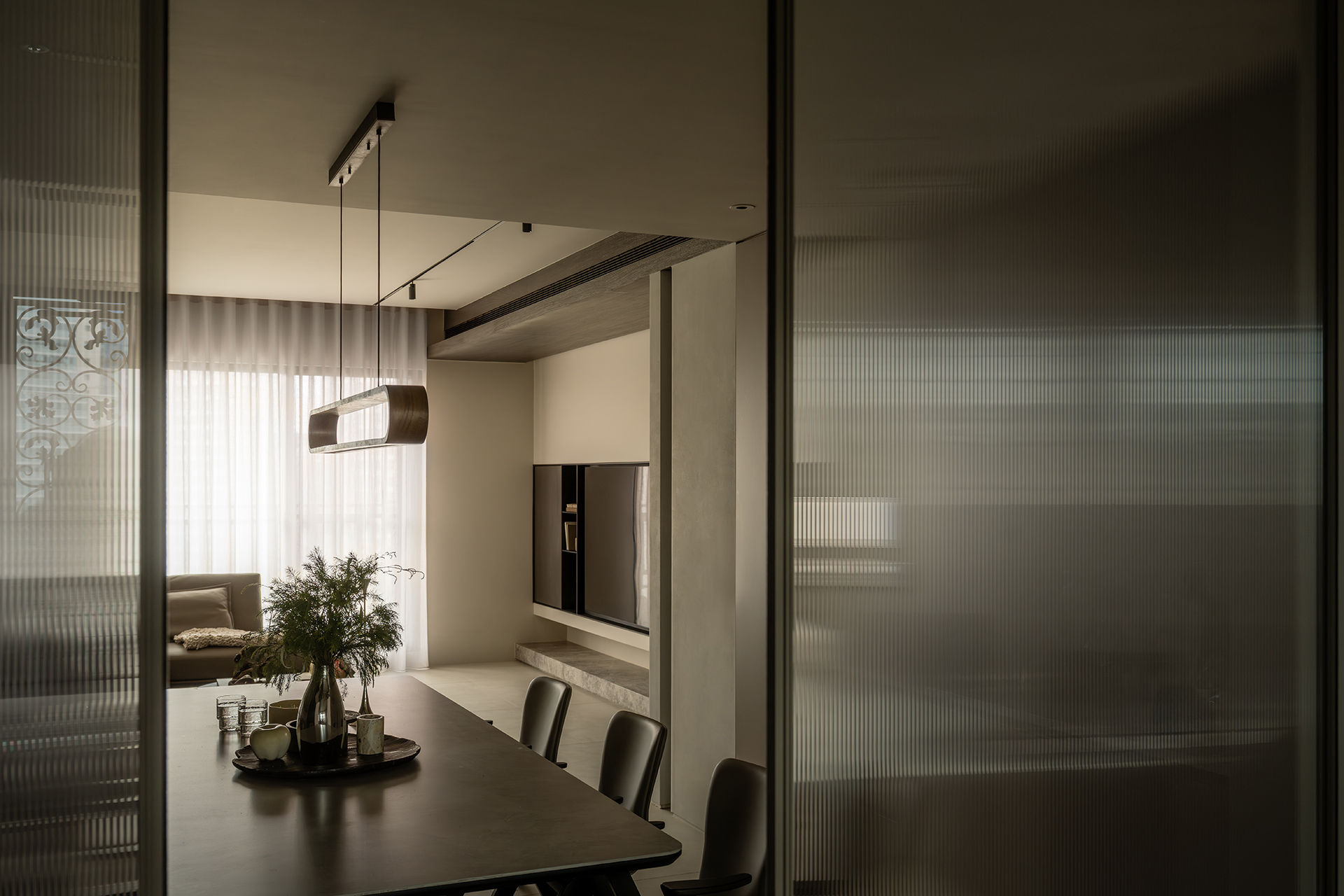
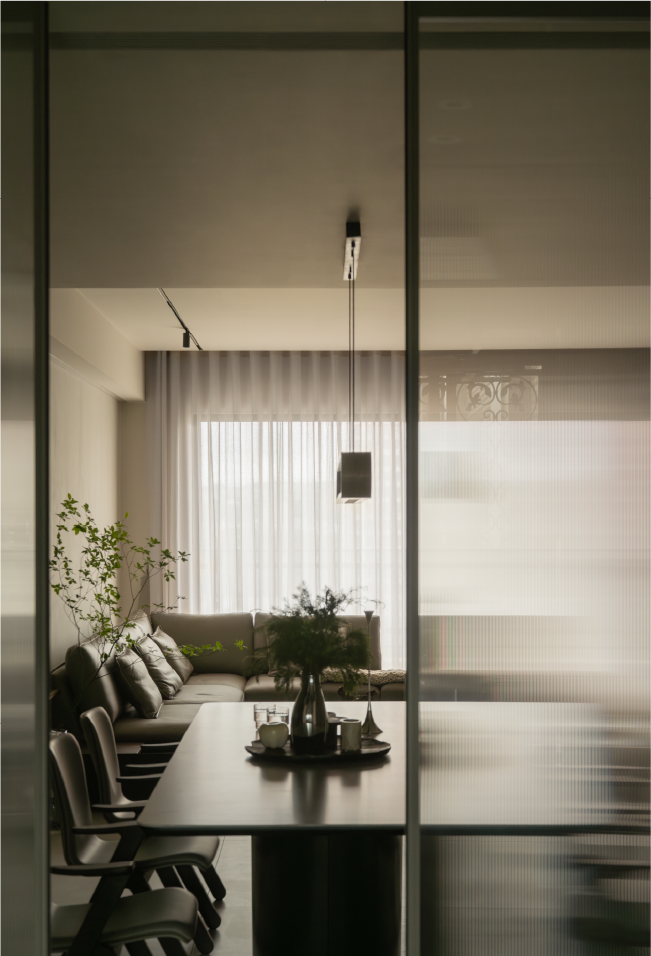
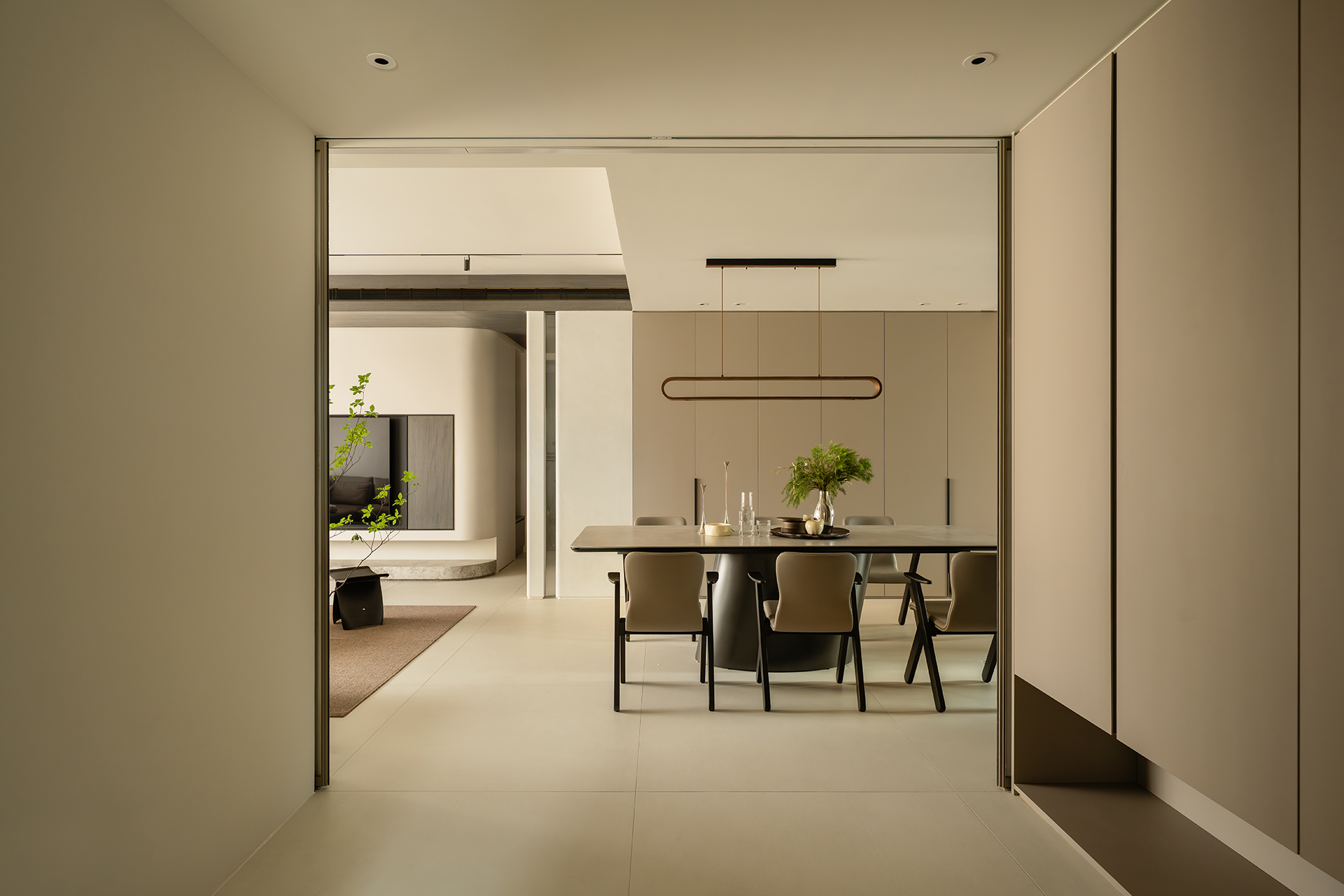
客廳與餐廳採取相鄰而連續的配置,公共空間在尺度與動線上彼此滲透。家具選用低飽和度的皮革材質,降低視覺對比,使不同機能自然融合於同一色溫之中,讓空間更顯安定而從容。餐桌緊鄰客廳,不以明確隔斷區分,而是透過材質與比例的安排,維持開放卻不雜亂的生活場景。
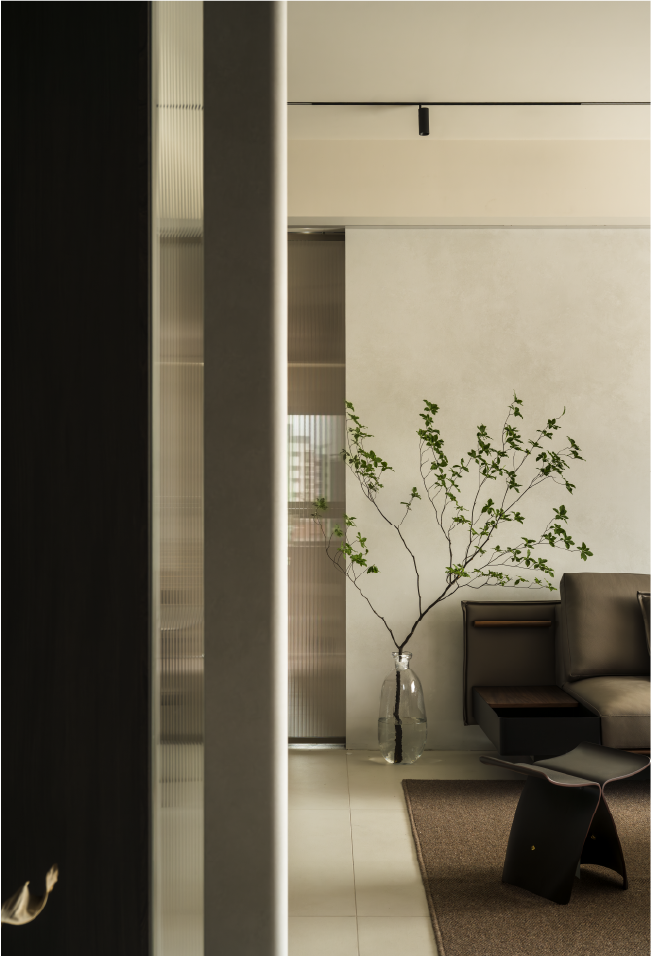
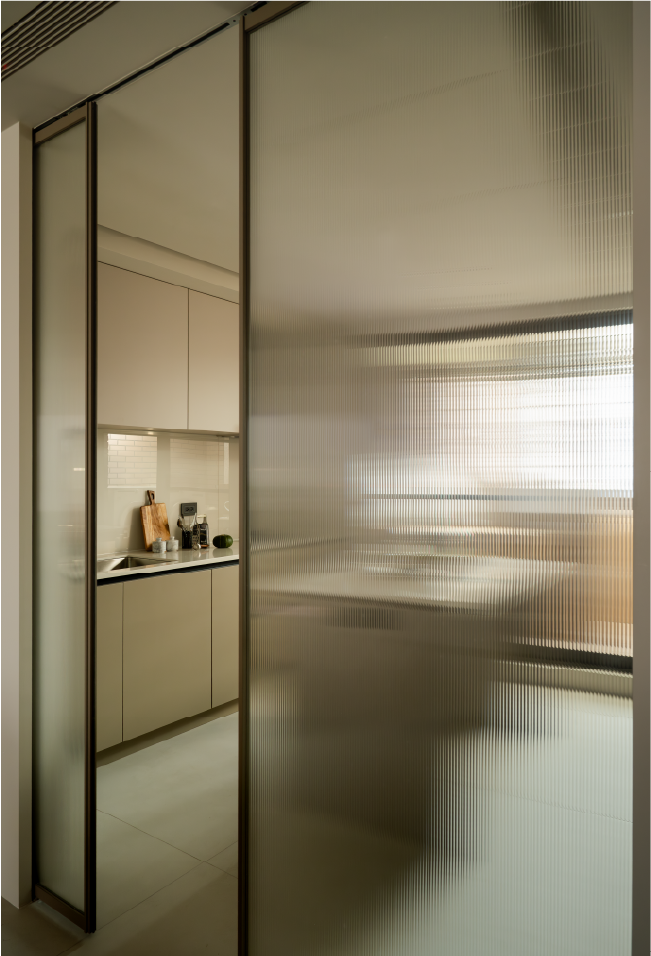
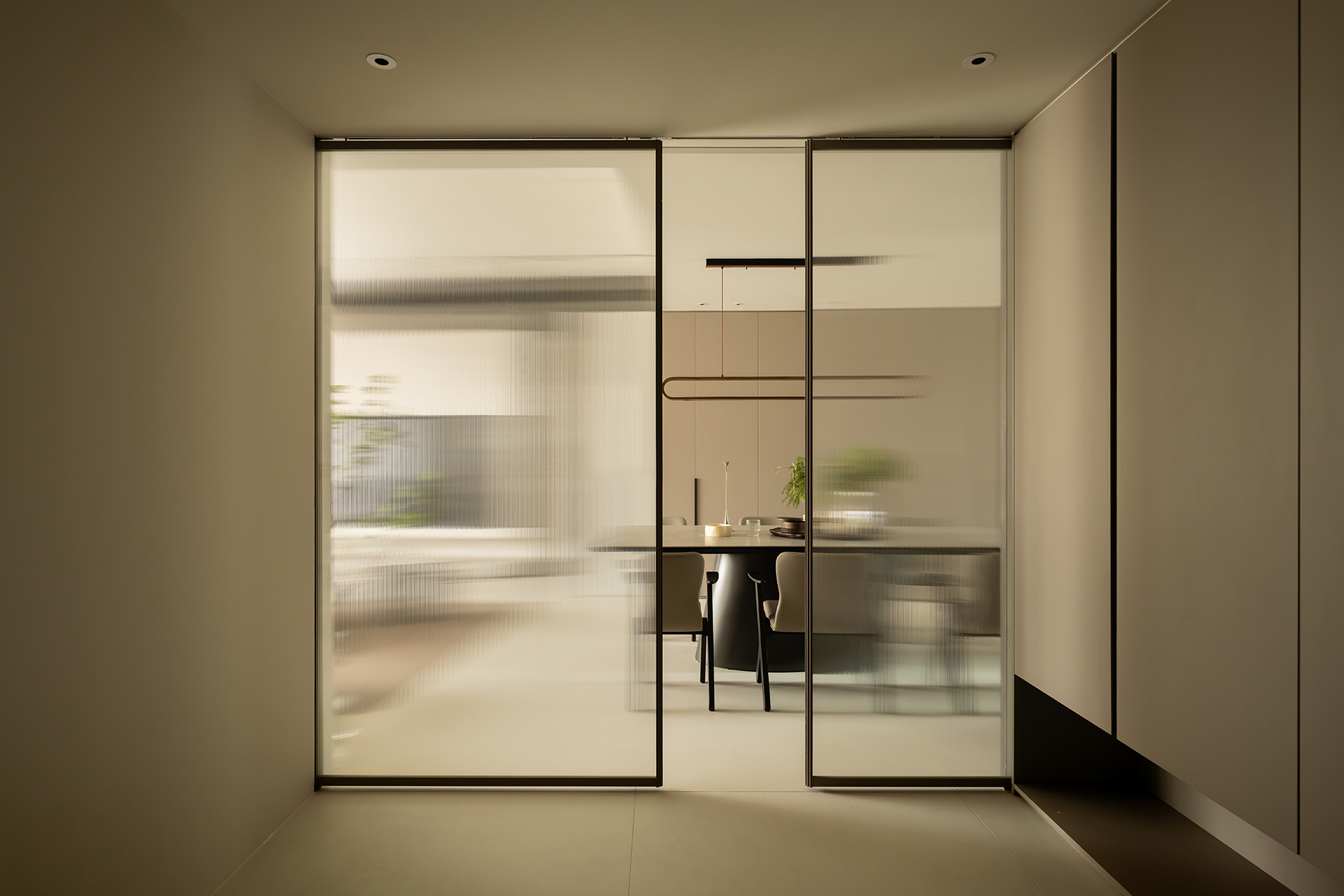
在界線的處理上,小冰柱玻璃成為串連全案的重要元素。運用於廚房與餐廳之間的小冰柱拉門,在實用層面有效阻隔油煙與氣味,同時回應廚房易顯凌亂的使用情境。半透的紋理模糊了細節,只保留光影與輪廓,使空間保持整潔印象,卻不失通透感,讓界線存在卻不顯突兀。
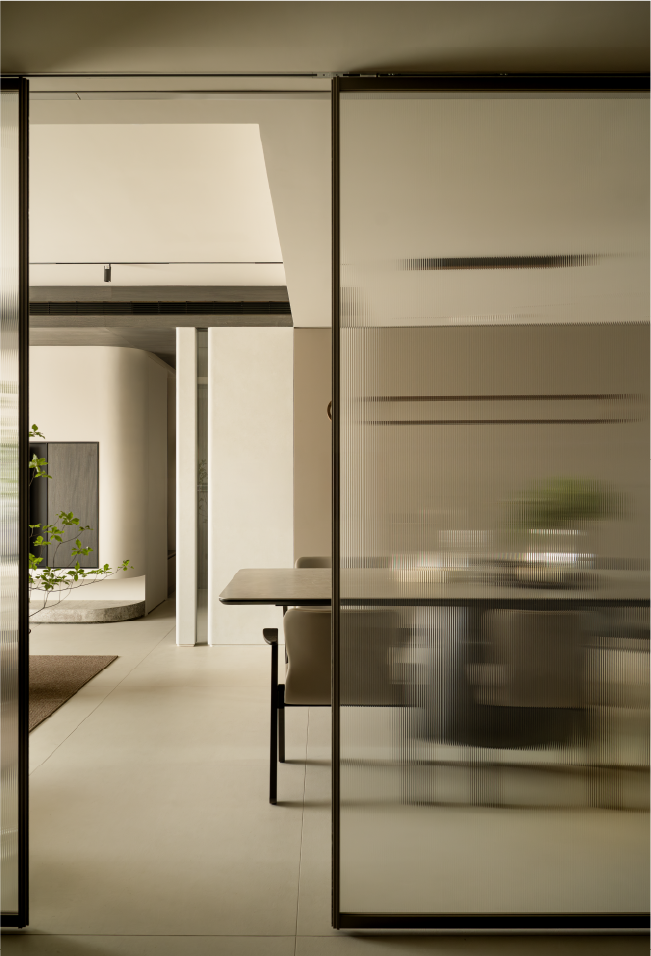
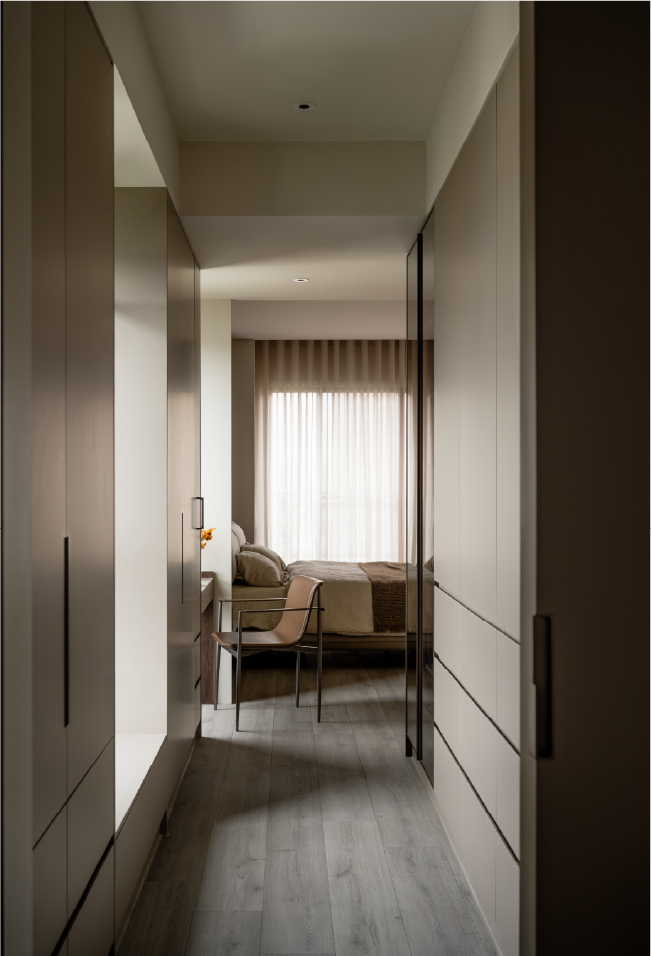
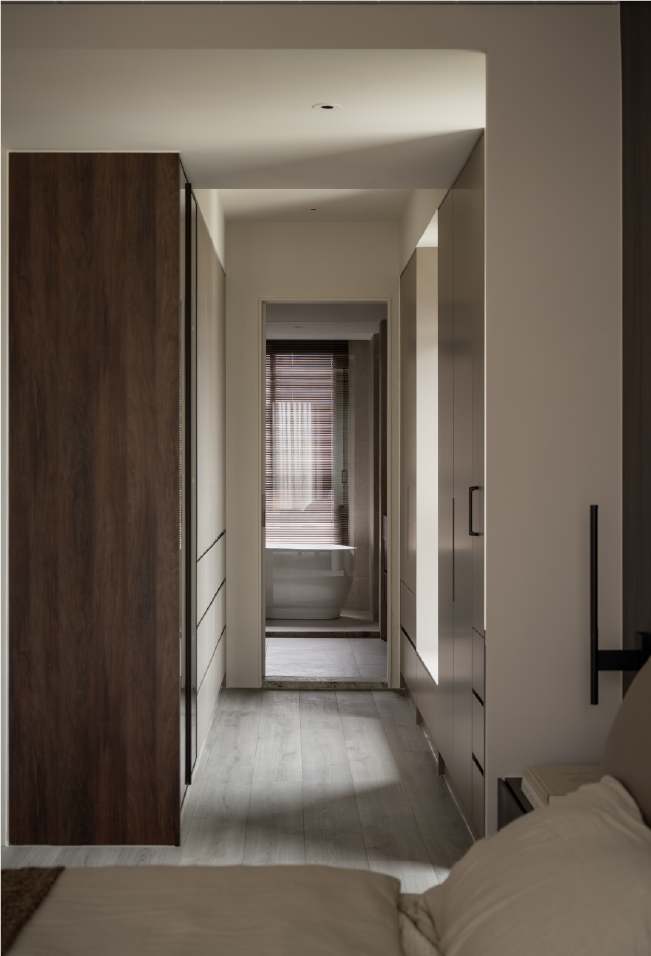
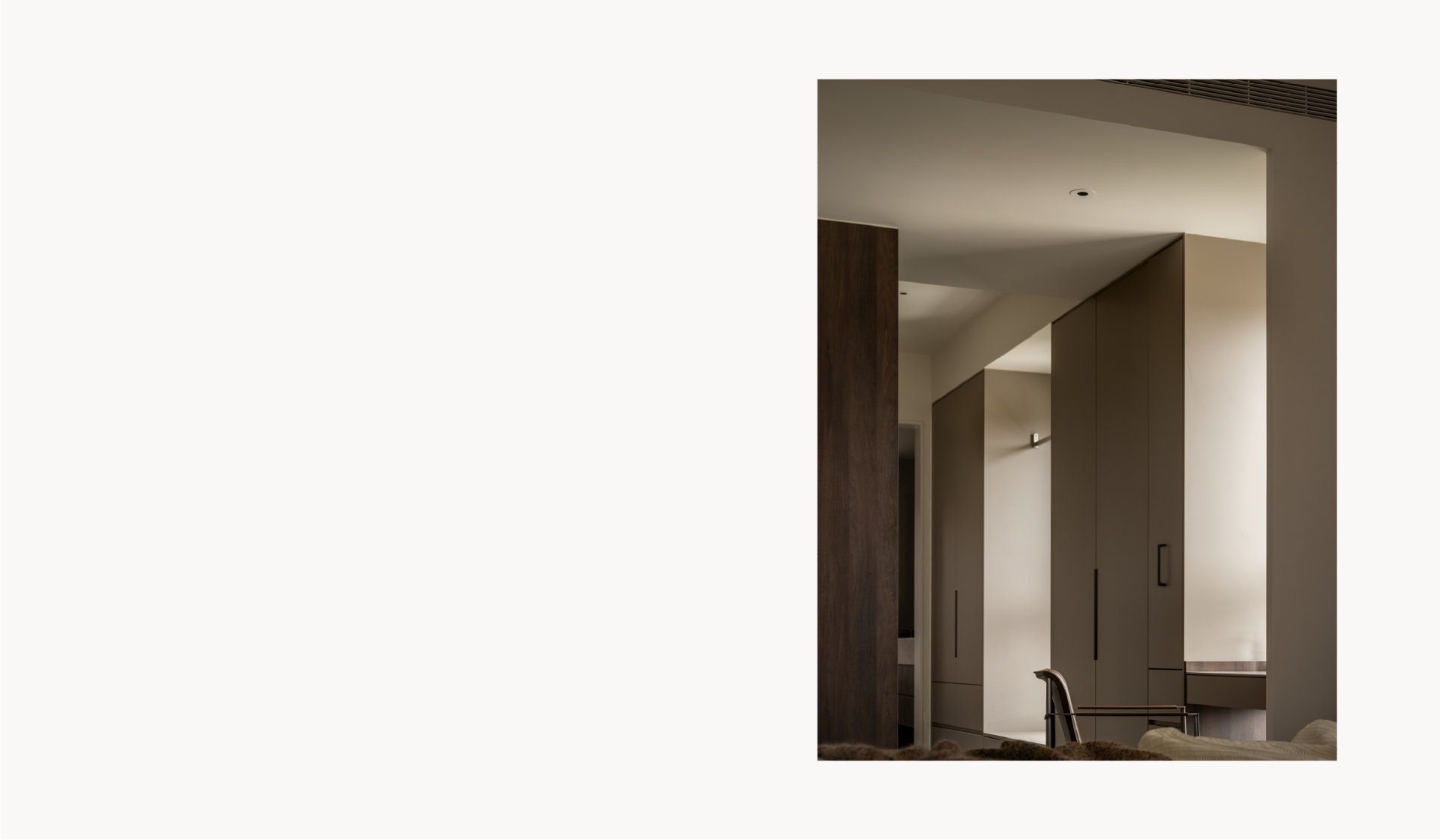
同樣的語彙延伸至公領域與私領域之間的走廊。小冰柱拉門在開與闔之間,調節著空間的狀態:關閉時,私領域得以安靜收納;開啟時,光線沿著走廊滲透,讓整體空間重新連結。走廊因此不再只是過道,而成為一處被光線柔化的緩衝場域,使公與私的轉換更加緩慢而有層次。
整體而言,本案並未以強烈的形式語言主導空間,而是透過材質、曲線與半透介面的運用,讓界線成為一種被感知的存在。空間在開放與收斂之間取得平衡,回應生活的秩序,也為日常留下餘裕與安靜的呼吸。
This project is defined by the theme of boundaries and thresholds, seeking a careful balance between openness and separation. Rather than pursuing complete transparency, the design allows boundaries to exist in a softened form—maintaining visual clarity while clearly responding to the functional needs of daily life. A restrained palette of low-saturation beige and grey establishes the foundation, layered with stone, dark wood, and leather. Together, these materials create a composed and grounded atmosphere, allowing light to move gently across surfaces and giving the space a quiet sense of depth and permanence.
The entry sequence sets the tone for the spatial narrative. To the right of the entrance, a concealed door leads to the study, positioning it close to the entry for convenience while preserving its independence from the main living areas. This placement allows the study to function as a focused retreat—accessible, yet discreetly removed from daily activity. The entry corridor unfolds with a subtle curve, offering both visual and spatial guidance. This curvature gently suggests movement, leading the eye and body toward the living room.
At the point of transition, the TV wall comes into view, echoing the same curved geometry. Beyond its aesthetic presence, the softened edge reduces sharp angles, enhancing safety for children while easing the spatial tension between the entry and the living area. Rather than acting as a barrier, the curved wall establishes a visual dialogue, allowing the two spaces to engage with one another through form.
The living and dining areas are arranged in close proximity, forming a continuous public zone. Furniture upholstered in low-saturation leather tones helps unify the space, minimizing contrast and creating a cohesive visual rhythm. The dining table sits adjacent to the living room, defined not by partitions but by proportion and material continuity, supporting an open yet composed everyday setting.
Fluted glass sliding doors play a key role in articulating spatial boundaries throughout the home. Between the kitchen and dining area, the fluted glass serves a practical purpose by containing cooking odors, while visually softening the inevitable clutter of a working kitchen. The semi-translucent texture obscures detail while preserving light and movement, allowing the boundary to be perceived without becoming visually heavy.
This material language continues along the corridor separating public and private zones. Here, fluted glass sliding doors regulate the relationship between openness and privacy. When closed, they provide quiet separation for the private rooms; when open, light filters through the corridor, reconnecting the spaces. The corridor thus transforms from a simple passageway into a transitional zone—one shaped by light, movement, and subtle shifts in atmosphere.
Overall, the project avoids overt formal gestures, instead relying on material nuance, curved forms, and translucent boundaries to shape the spatial experience. Boundaries are not used to divide, but to mediate—allowing the home to remain open, calm, and responsive to the rhythms of everyday life.