
Lihao Design Creator 00050
空間以安定而節制的語彙展開,設計關注的是日常使用的流動、停留與轉換,而非單一元素的表現。公共與私密、開放與收斂,在尺度、光線與材質的共同作用下,被自然地組織成一段連續的生活場景。
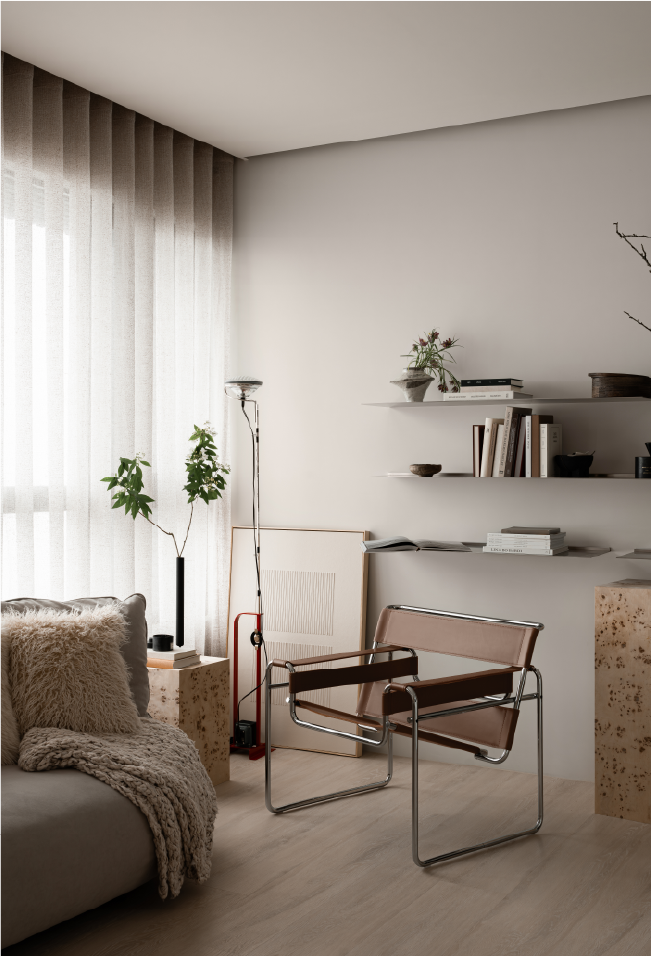
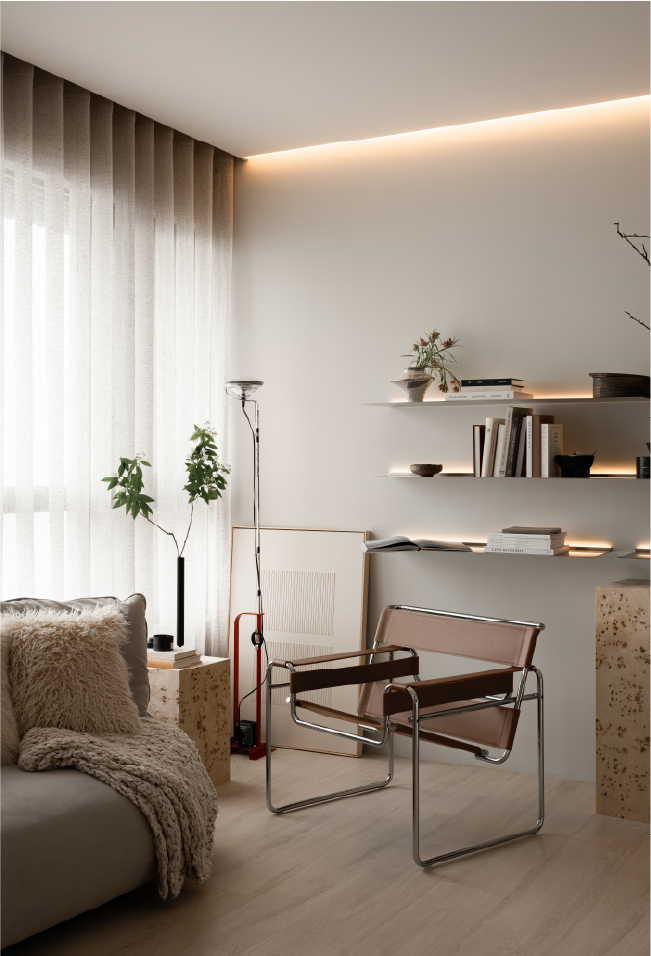
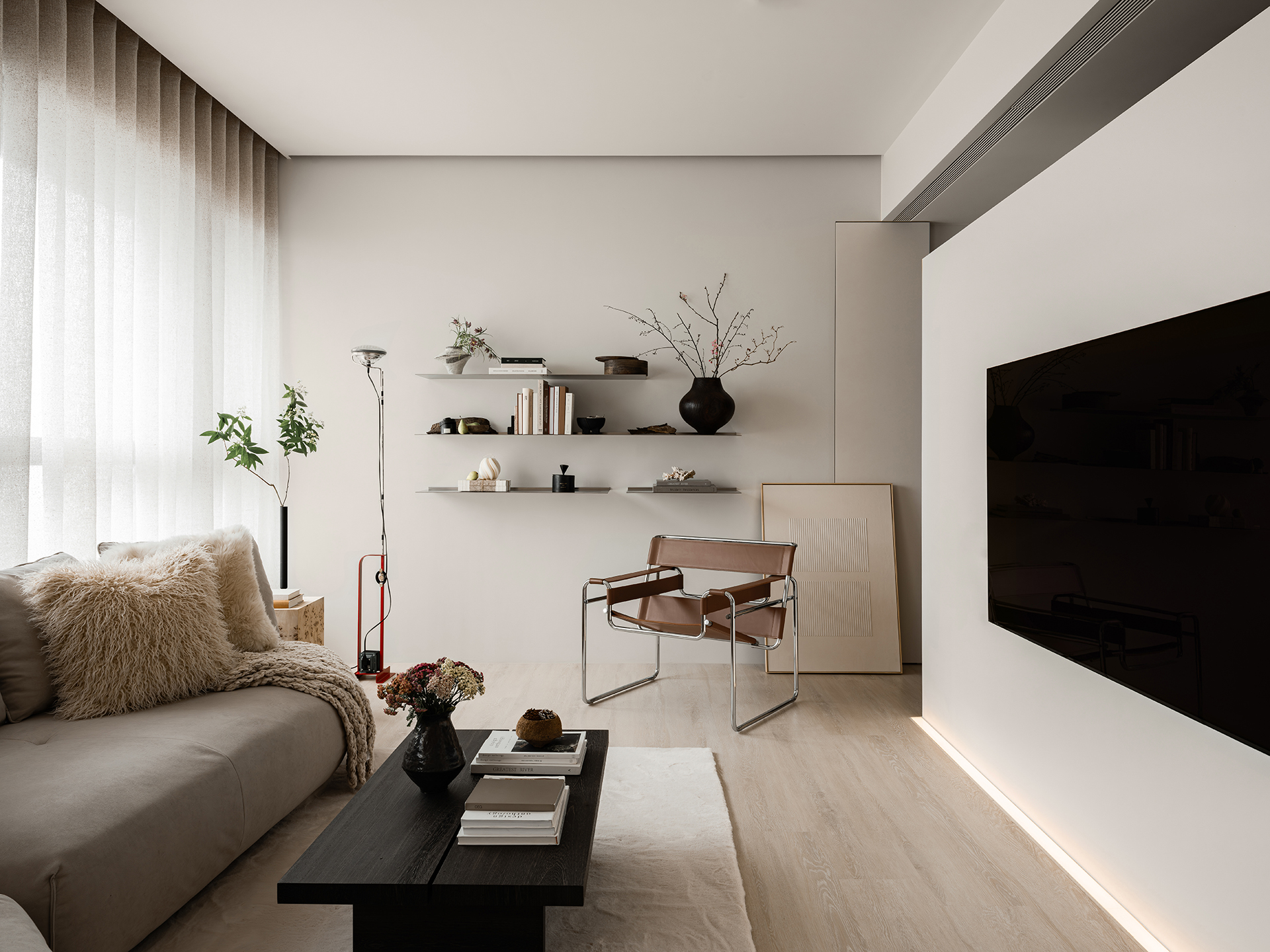
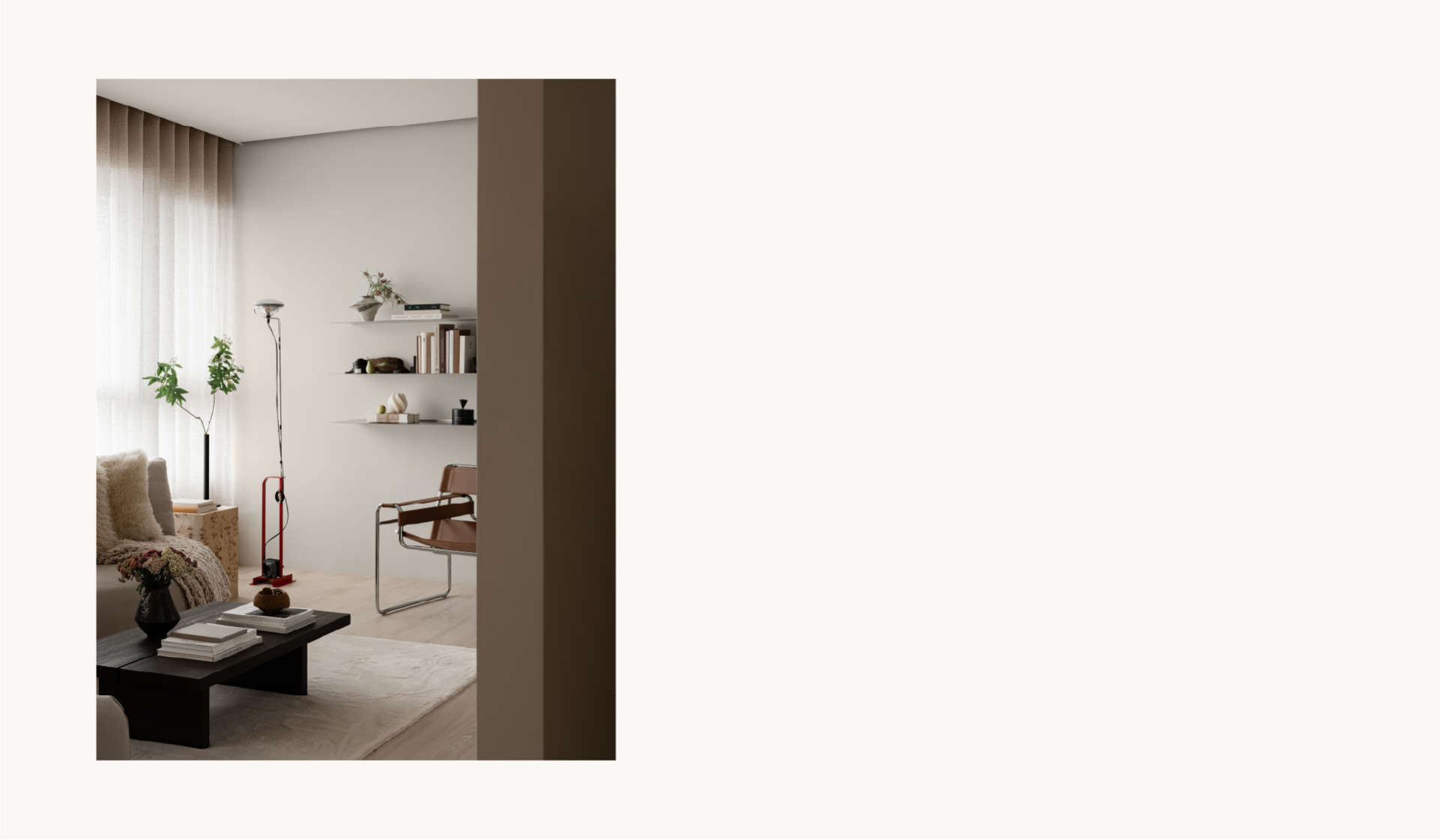
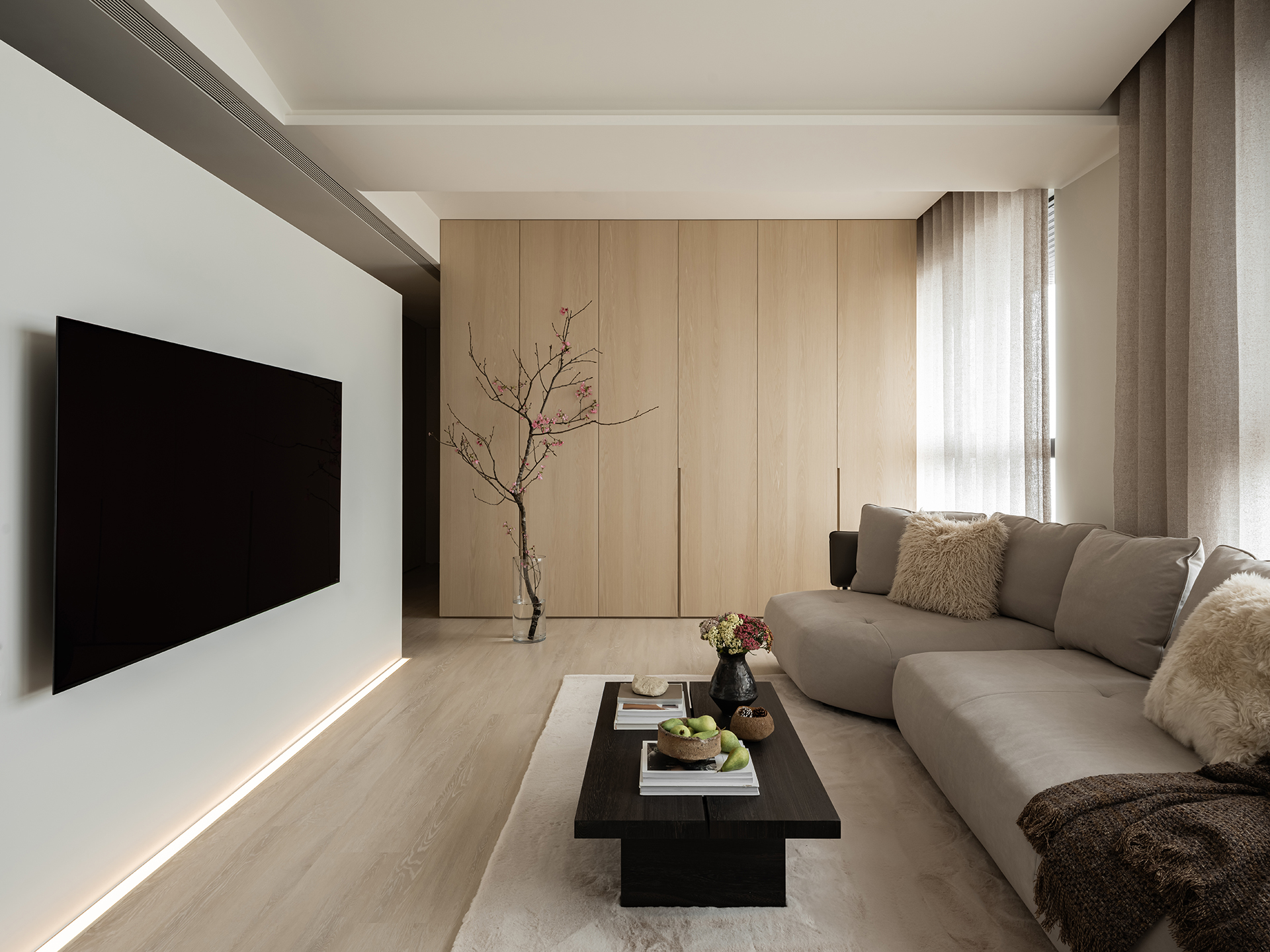
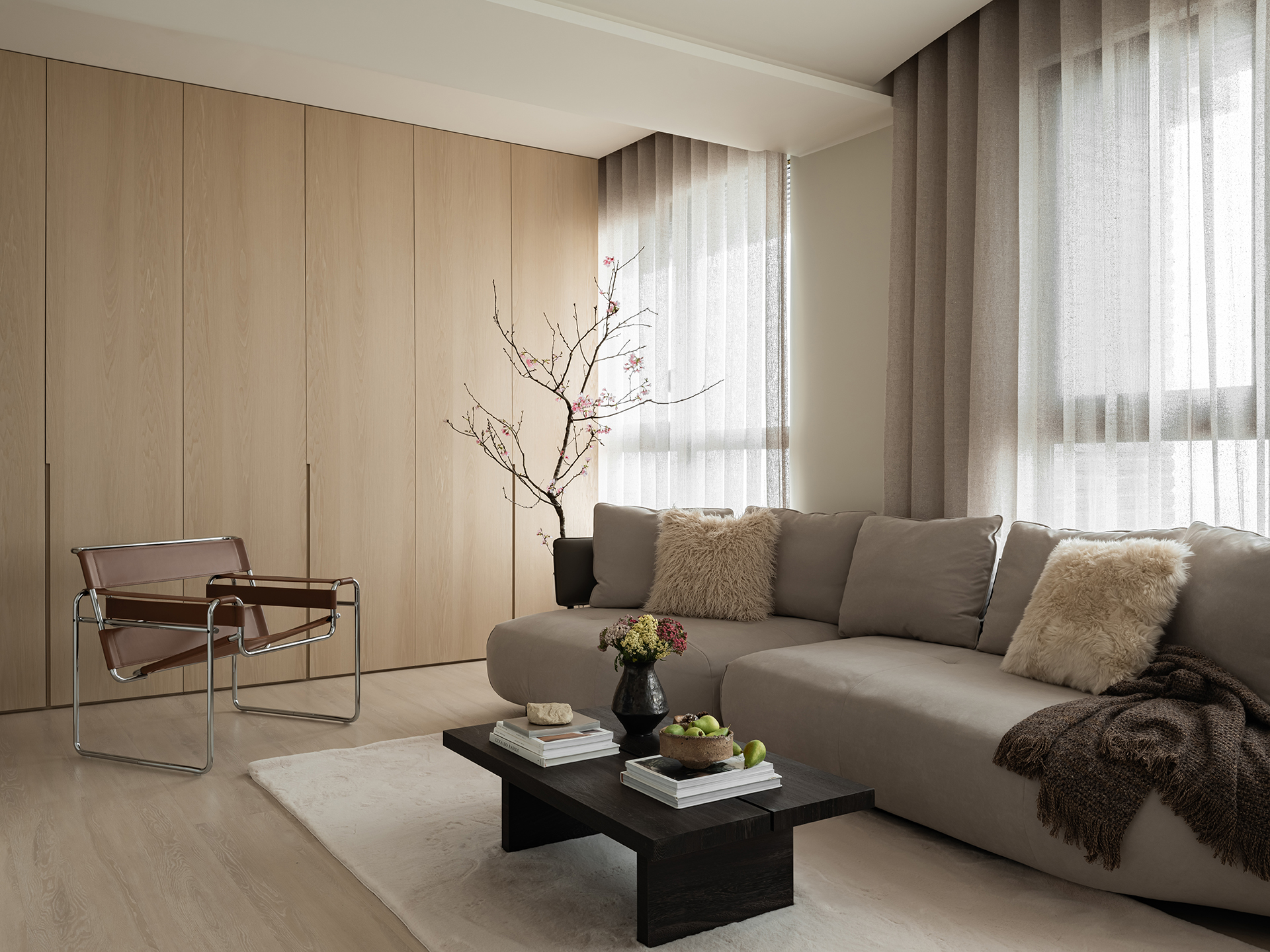
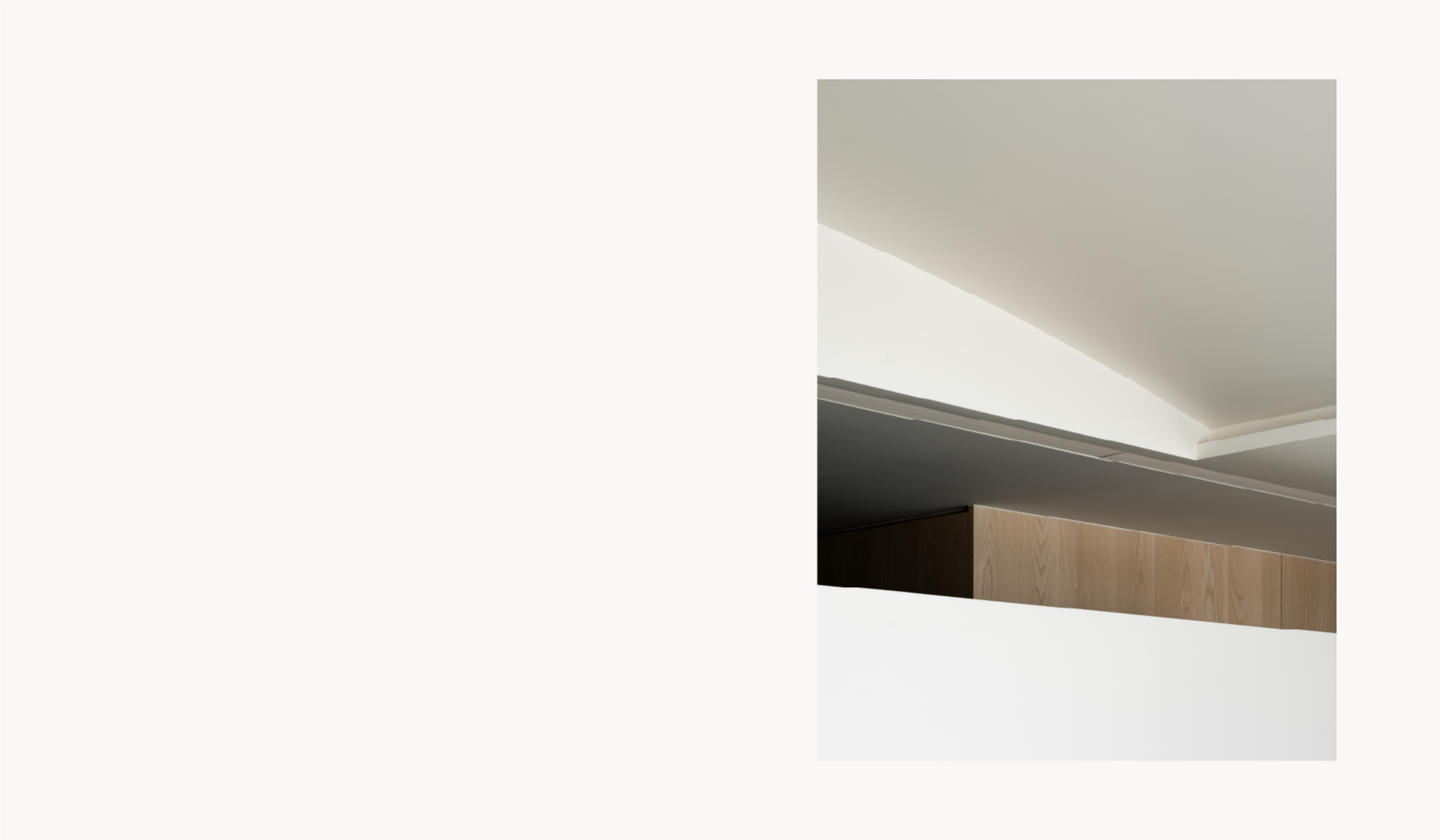
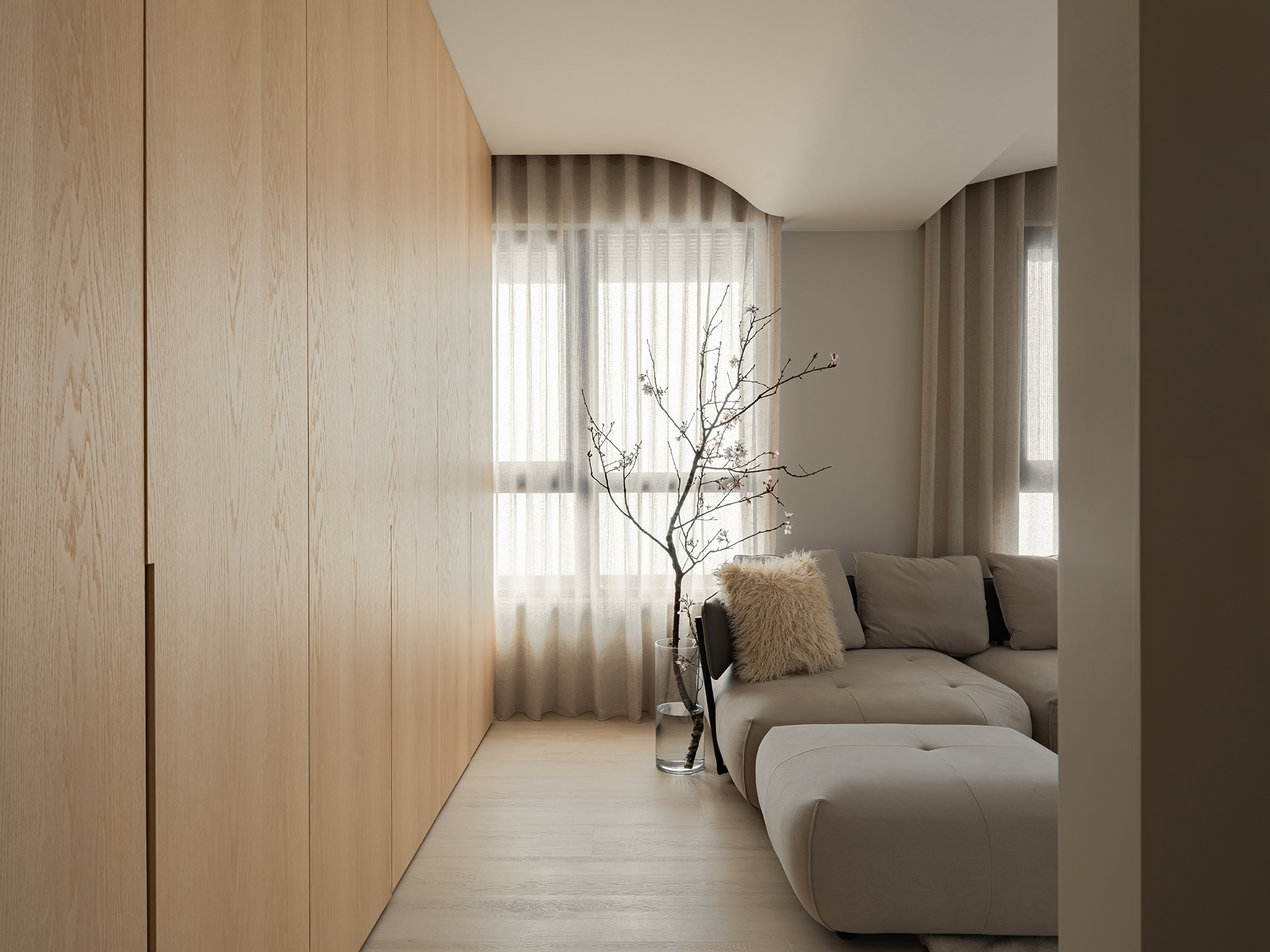
公共區域承接主要的採光條件,落地窗引入的自然光成為空間的重要基礎。光線在牆面與天花之間延展,使客廳維持明亮而不刺眼的狀態,適合長時間停留與交流。此處的材質配置以淺色系木皮為主,讓視覺保持開放與輕盈,也使光線能夠被完整保留於公共生活的核心場域。
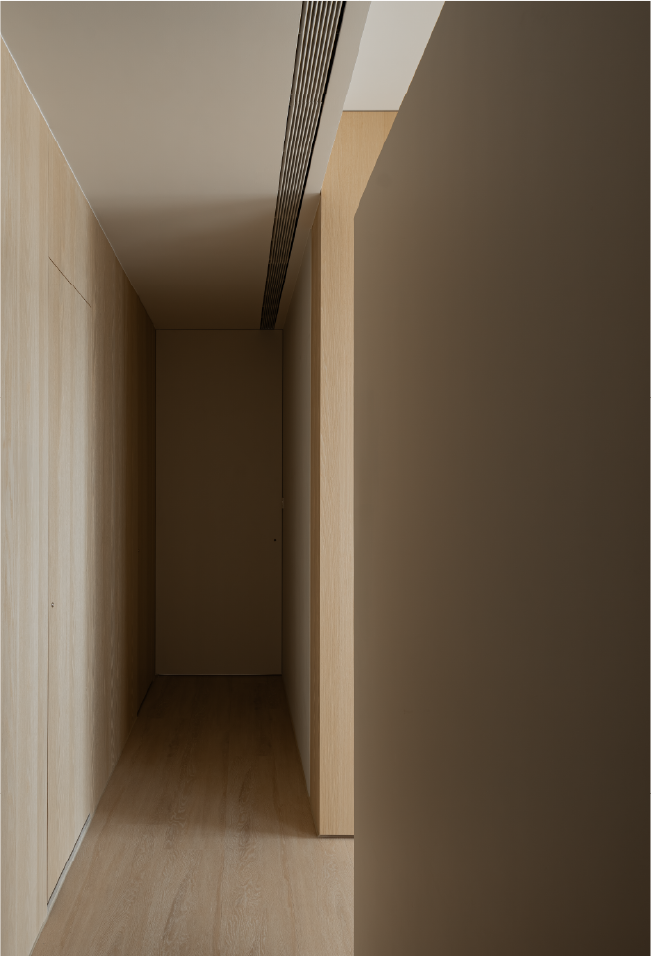
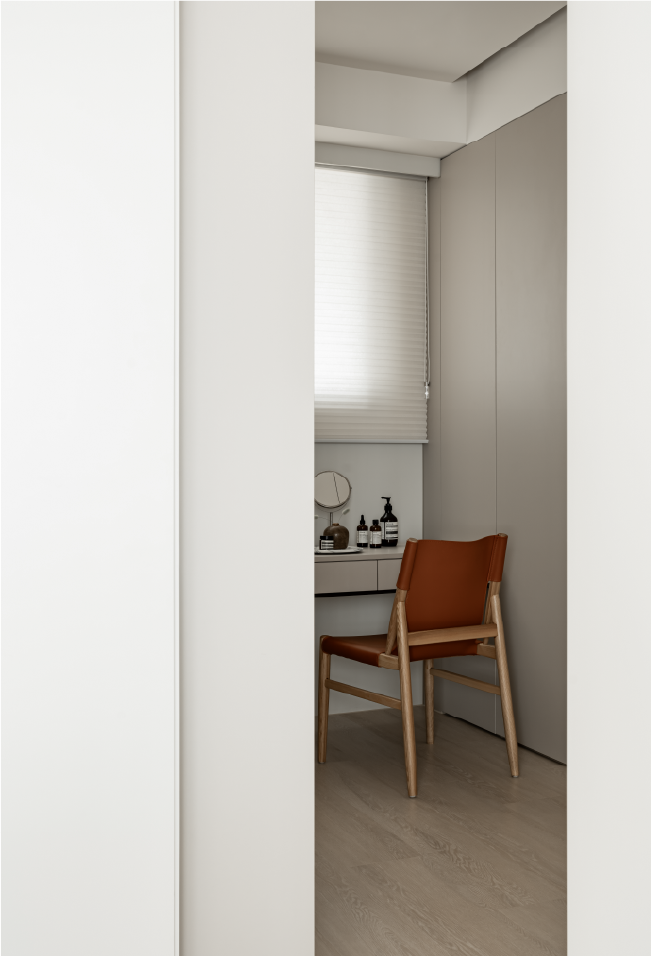
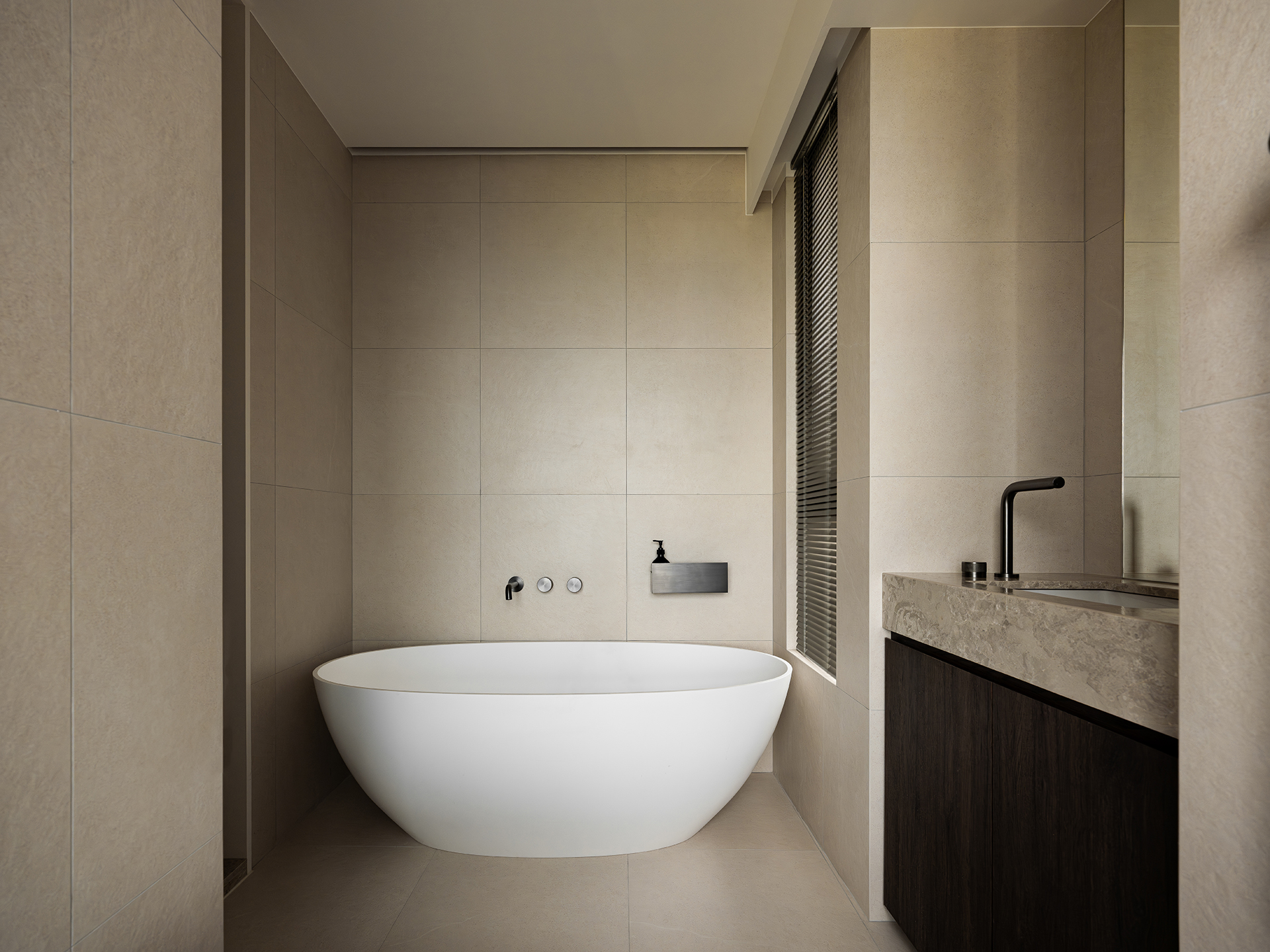
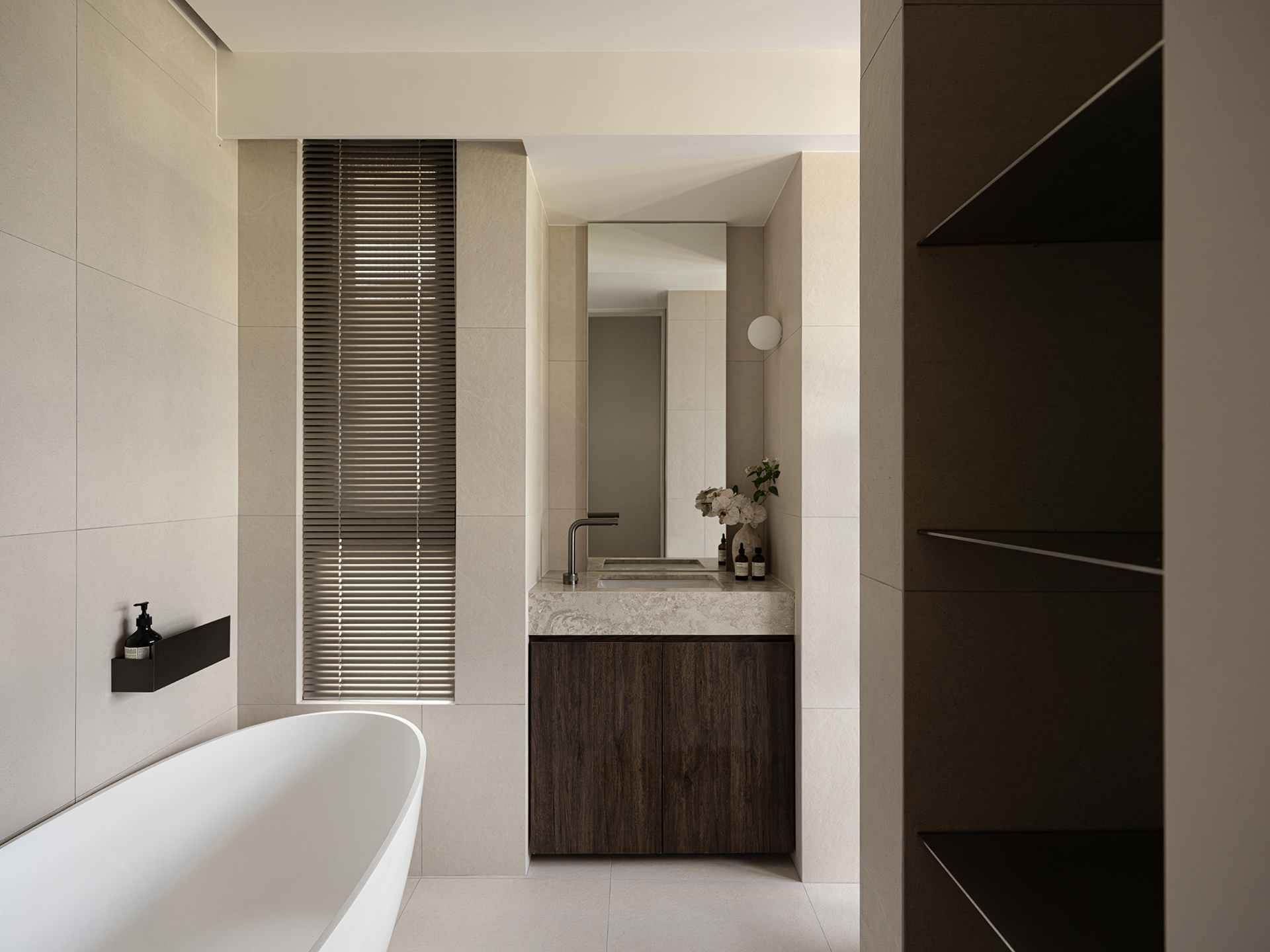
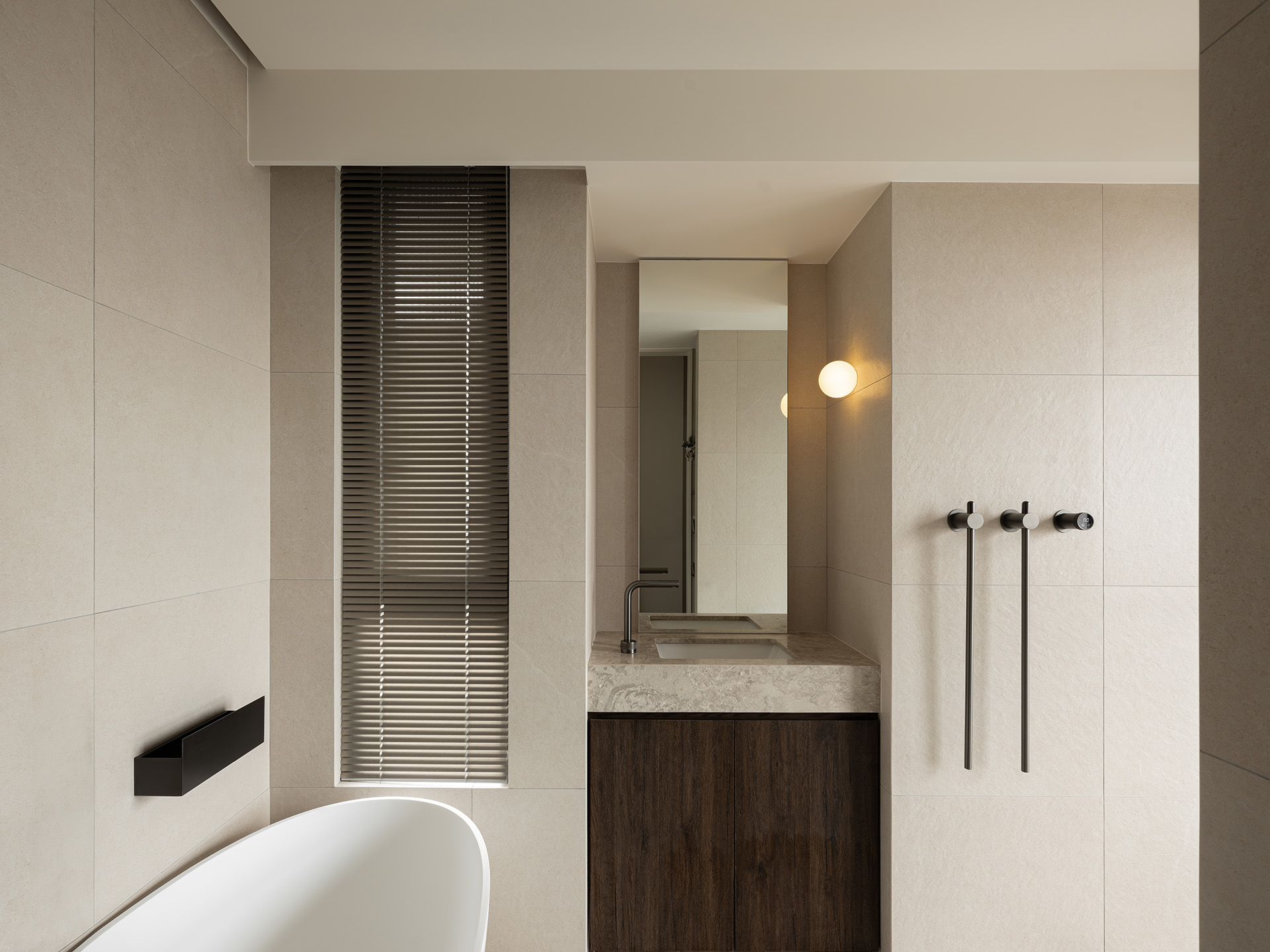
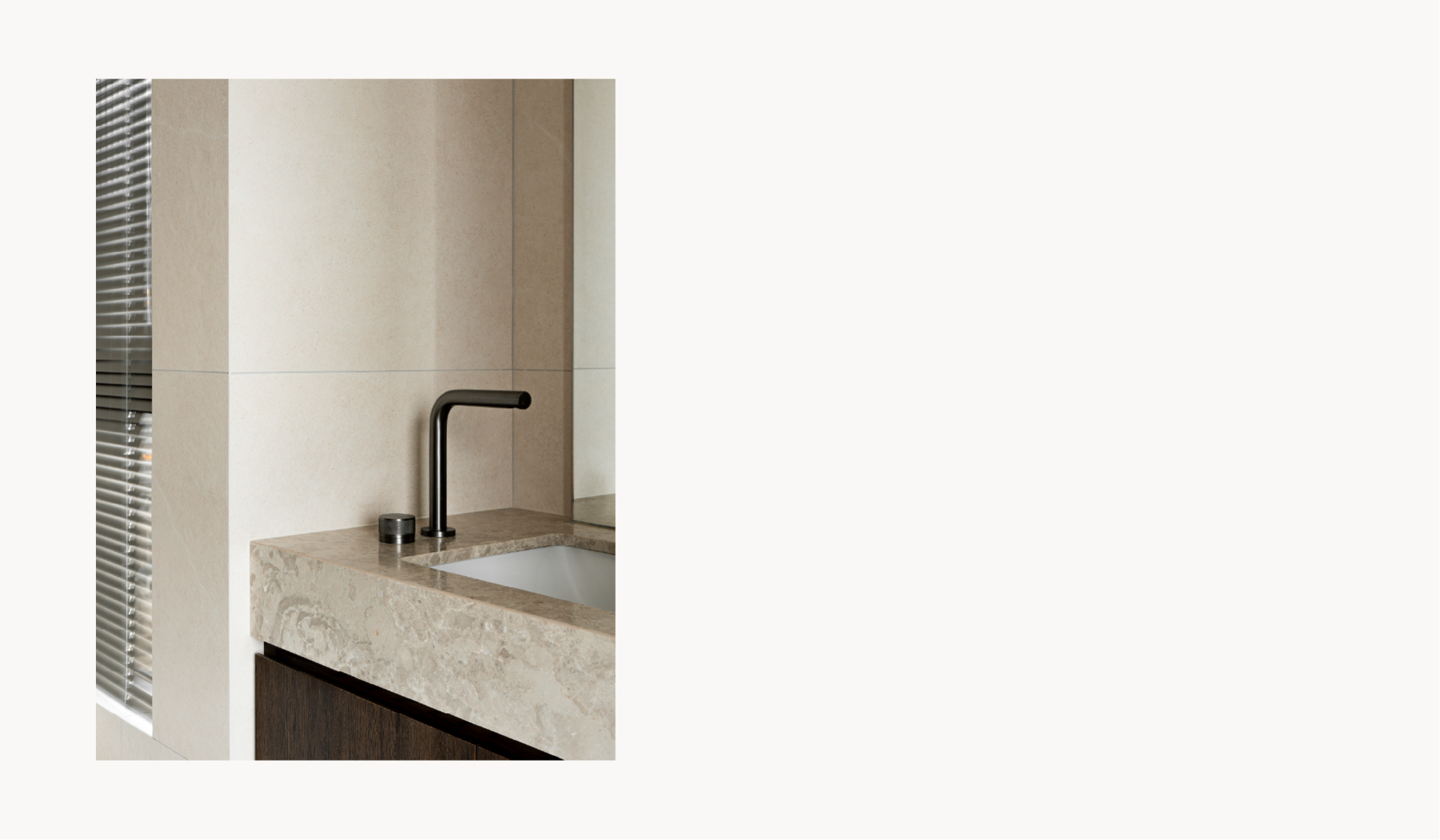
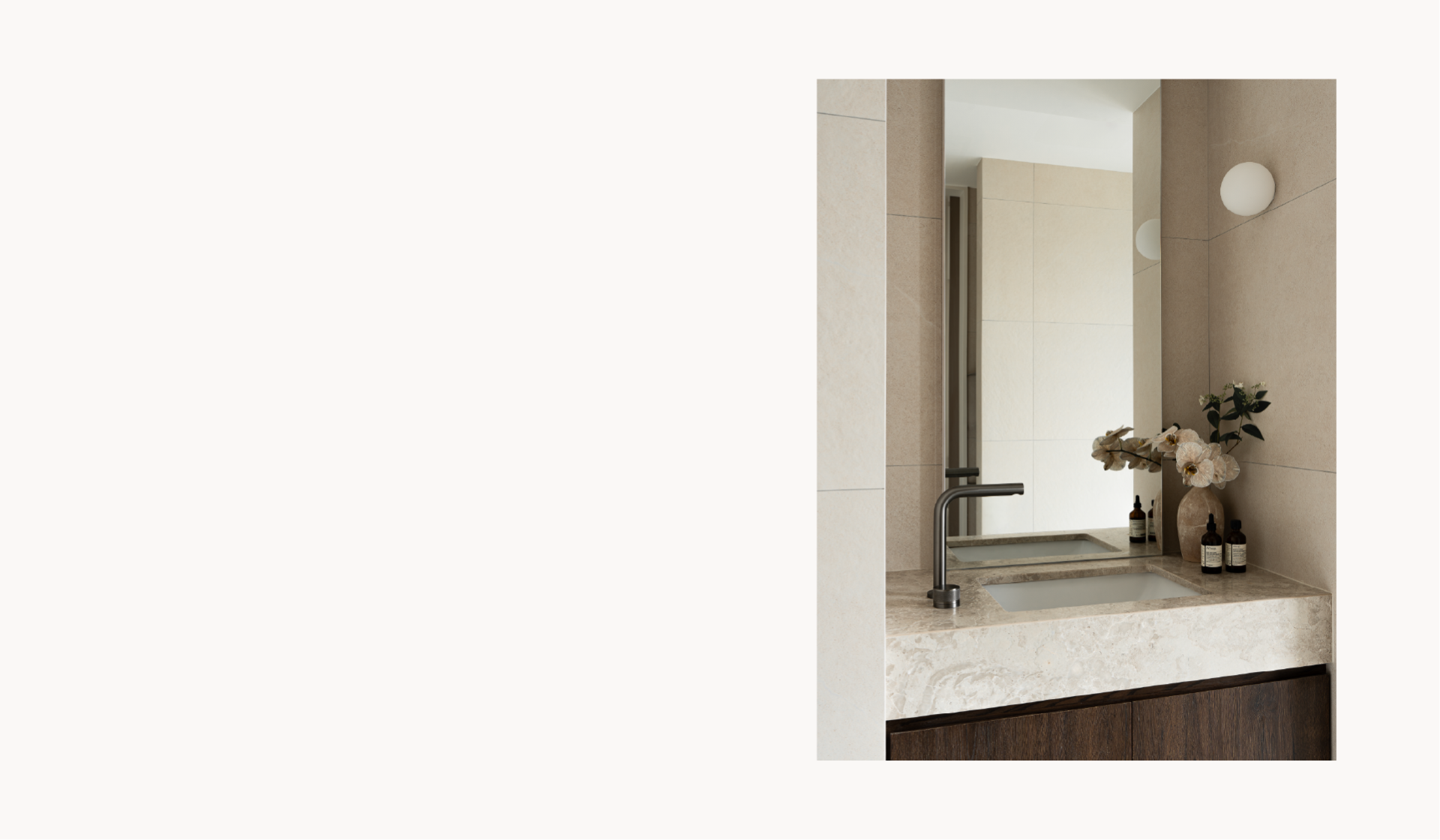
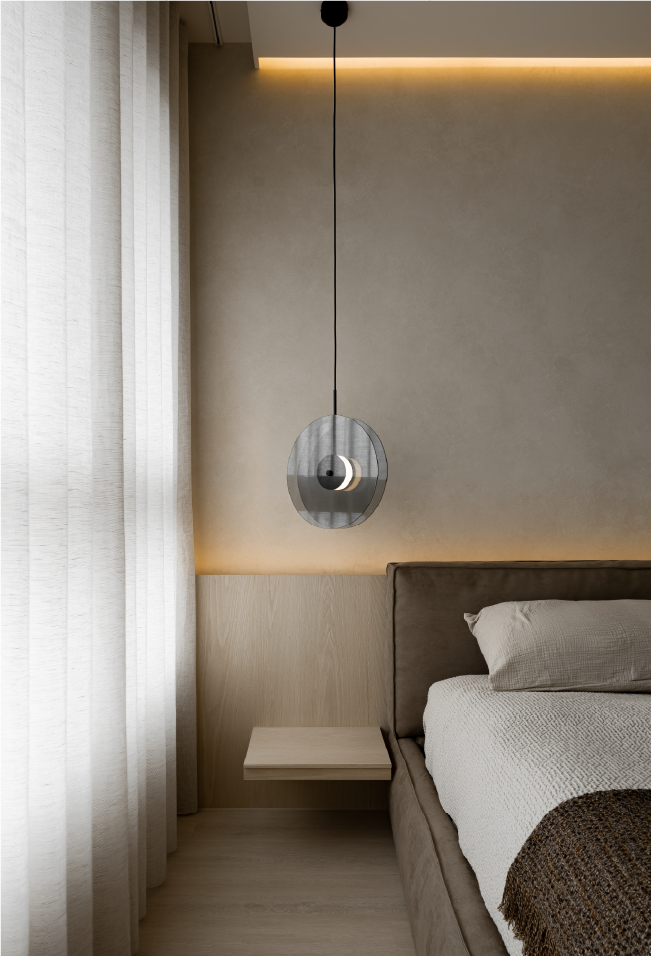
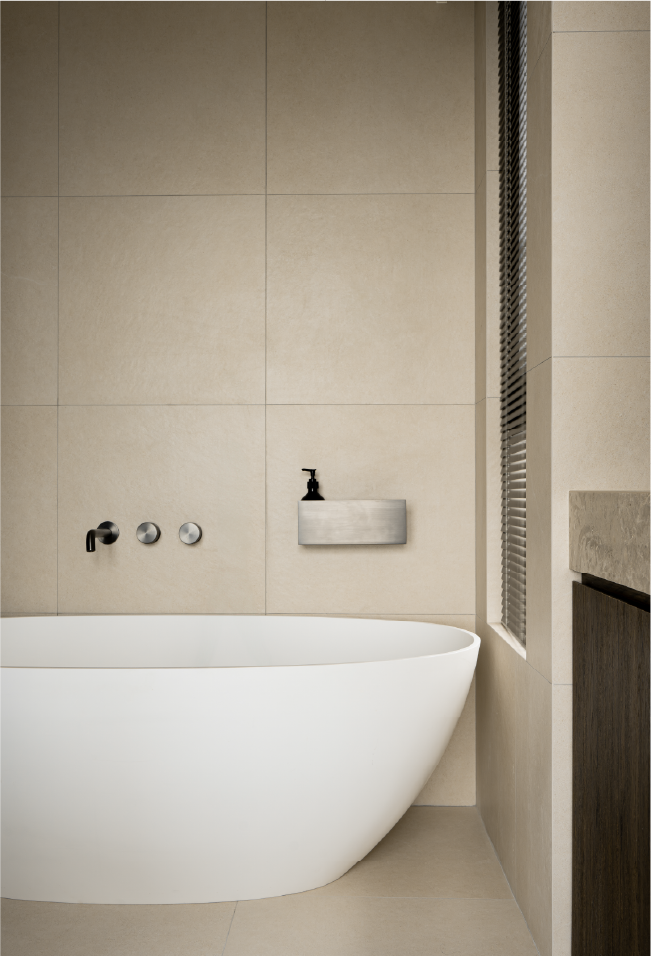
隨著動線向內,空間的情緒逐漸轉為內斂。臥室與浴室延續相同的材質語彙,卻轉而使用深色木皮,使整體氛圍自然沉澱。這樣的配置並非為了製造對比,而是透過木皮深淺的轉換,回應不同生活狀態的需求——公共空間向外展開,私領域則回歸安定與靜謐。材質在整體中反覆出現,卻因位置與光感的不同,形塑出清楚而不張揚的情境差異。
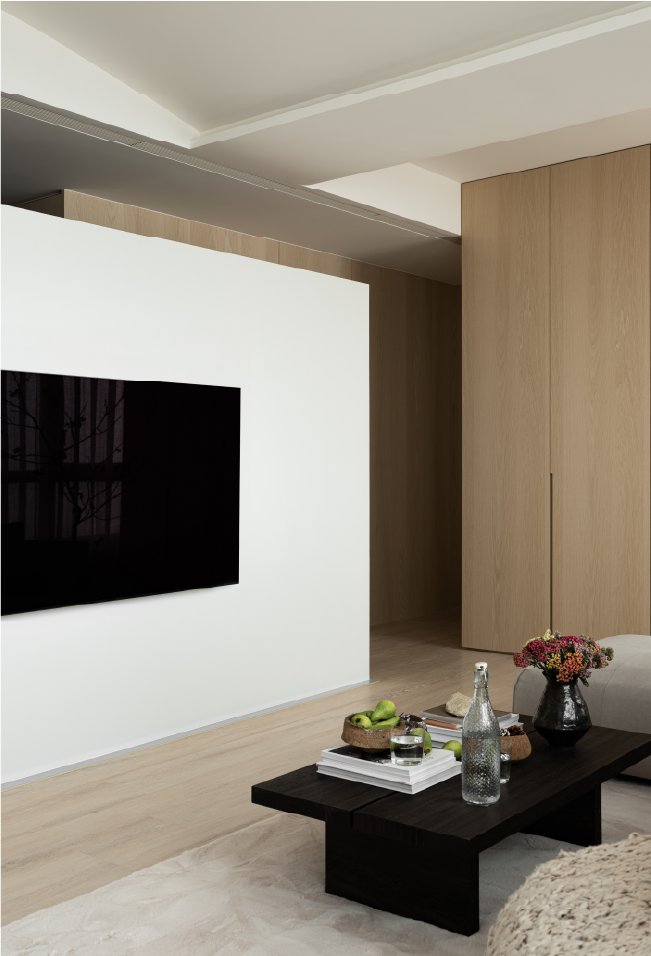
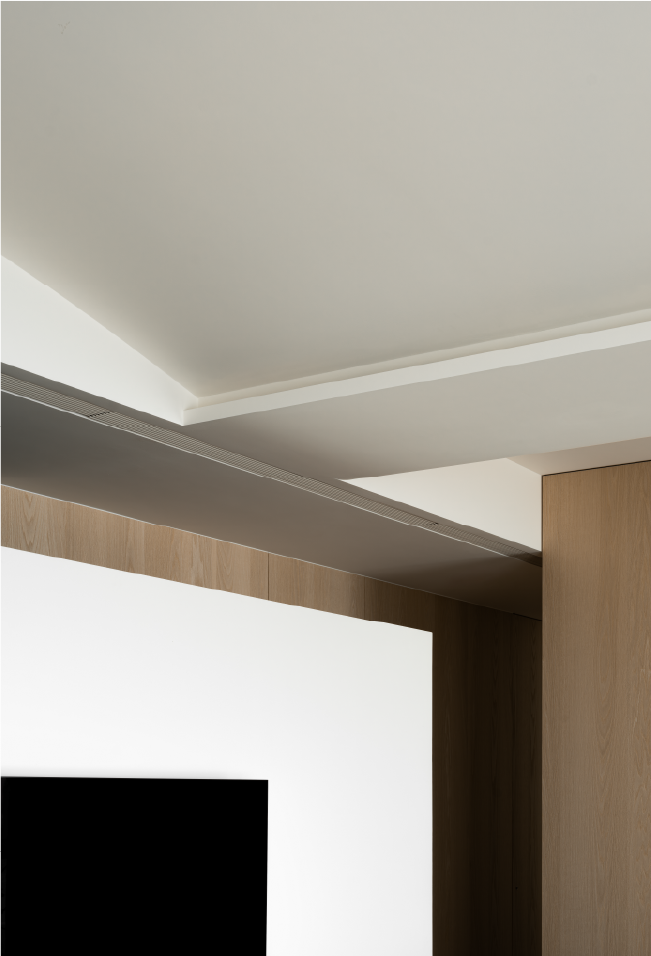
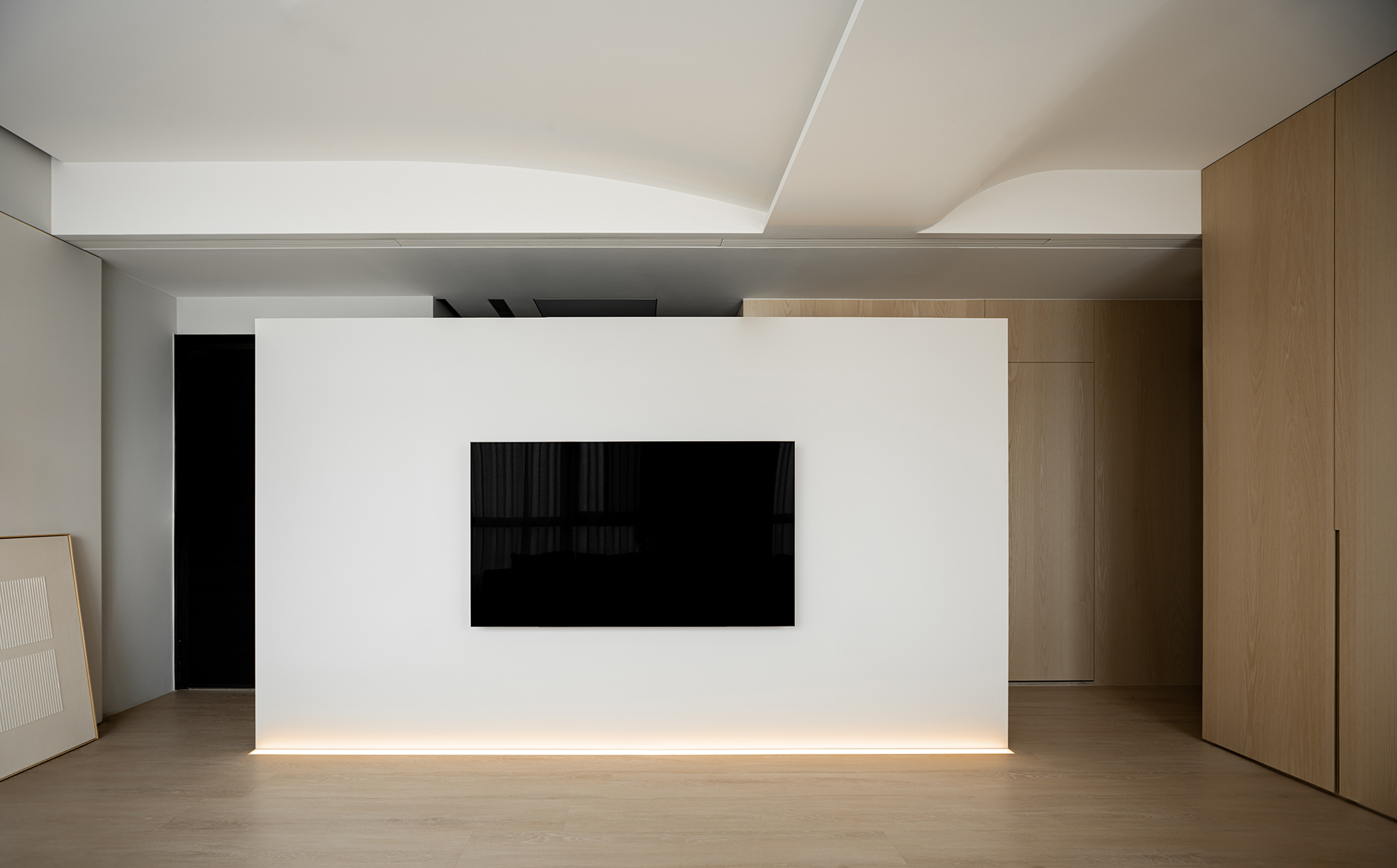
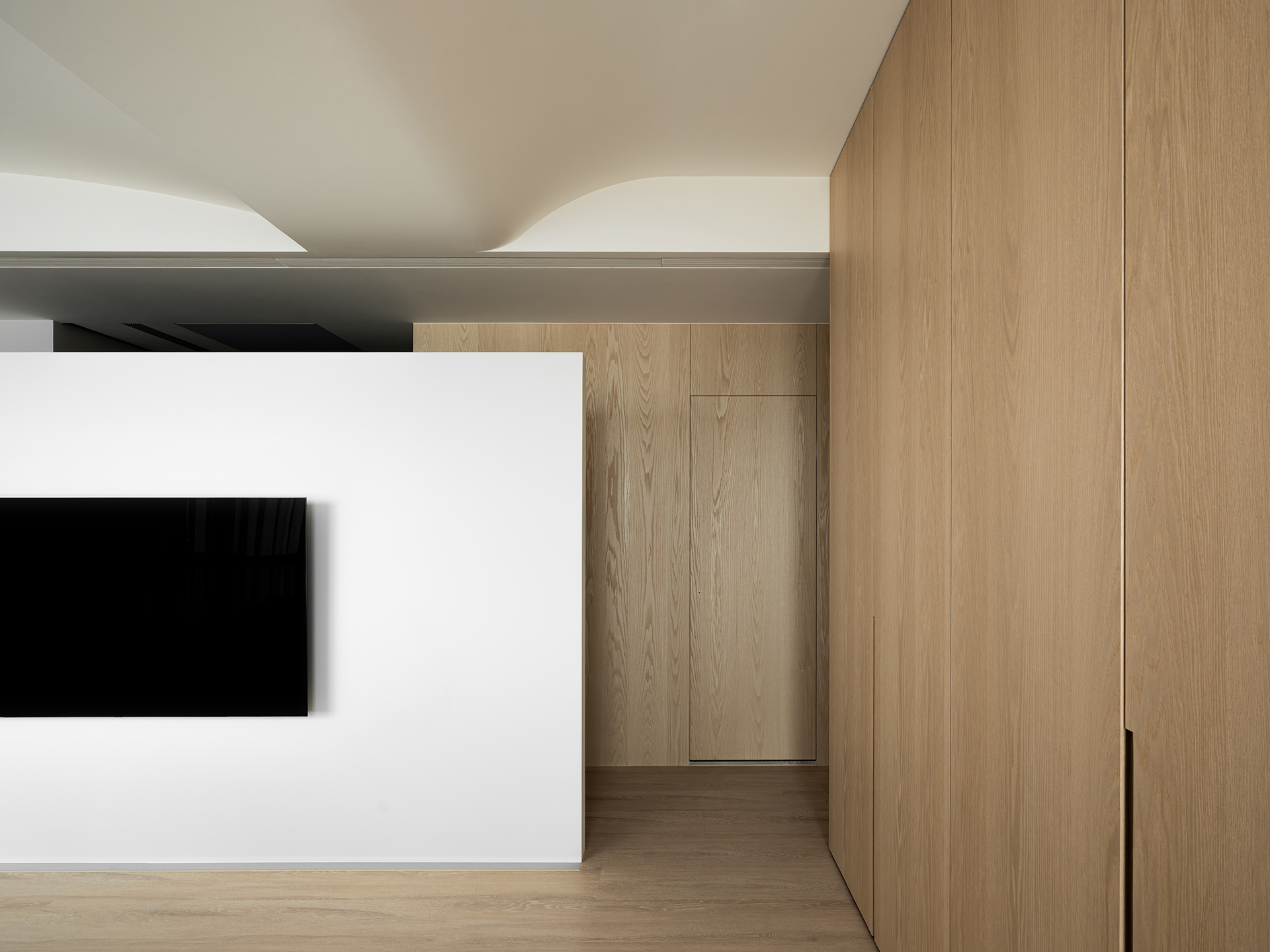
客廳中的電視牆以矮牆形式存在,作為入口與室內之間的緩衝量體。其尺度經過刻意控制,既能回應開門視線的安排,也不影響整體採光與視覺穿透性。牆面正對落地窗,使自然光持續停留於公共區域,進一步強化空間的明亮感受。
整體設計並不追求形式上的強烈表現,而是透過光線、材質與量體的協調,讓不同場域在同一設計語言中被理解。空間因此保有秩序,也留有餘白,成為能夠承載日常變化的生活背景。
The space unfolds through a calm and restrained design language. Rather than focusing on individual elements, the design considers how daily life flows, pauses, and transitions. Public and private moments are gently organized through scale, light, and material, forming a continuous living environment.
The public areas receive abundant natural light from the floor-to-ceiling windows, allowing daylight to become a defining feature of the space. Light travels across walls and ceilings, maintaining a bright yet composed atmosphere suited for gathering and everyday activities. Here, light-toned wood veneer is used as the primary material, keeping the space visually open while preserving the full presence of natural light within the shared living area.
As one moves inward, the spatial mood gradually settles. The private areas—bedrooms and bathrooms—retain the same material language, yet shift toward darker wood veneer. This change is not intended as contrast, but as a subtle response to different living states. While the public space opens outward, the private zones return to calm and stability. The repetition of wood veneer throughout the interior, adjusted only by tone and light, creates a clear yet understated transition in atmosphere.
At the center of the living area, the TV wall is designed as a low volume, acting as a buffer between the entrance and the interior. Its carefully controlled height addresses sightlines upon entry while maintaining openness and uninterrupted daylight. Facing the window, the wall helps anchor natural light within the public space, reinforcing its brightness and clarity.
The overall design avoids overt gestures, instead relying on the balance between light, material, and form. Through this coordination, the space maintains order while leaving room for everyday life to unfold naturally.